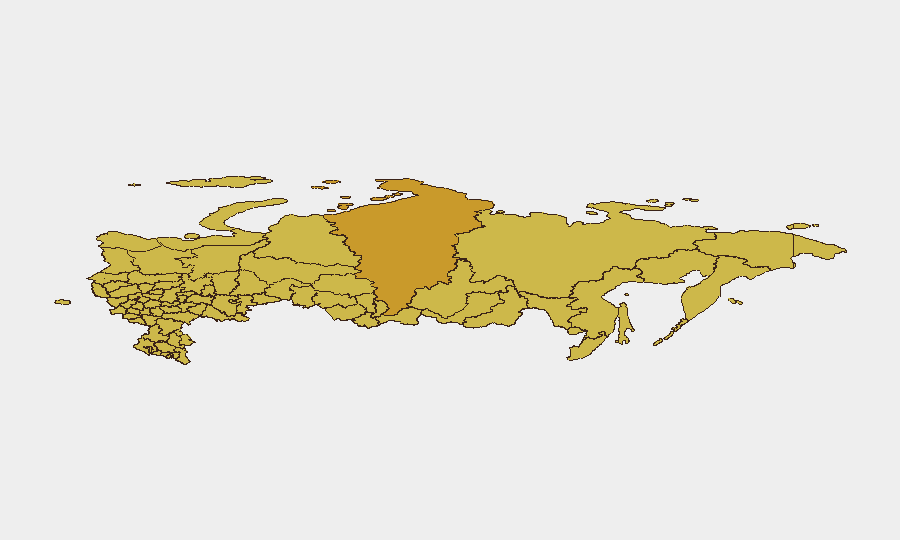
Situation Summary
Russia remains at composite threat rank #11 globally (score 88) with 1,128 tracked events, driven primarily by ongoing kinetic activity in border regions and continued drone warfare across western Russian territory. Moscow dominates sub-national risk (91.9), reflecting both military and administrative concentration; however, escalating events in Kursk, Krasnoyarsk Krai, and the North Caucasus indicate broadening geographic exposure. The security posture is deteriorating along the Ukraine border and within logistics/energy infrastructure nationwide.
Key Developments
- 2026-07-22, Russia-wide: Russian air defense claimed interception of 242 Ukrainian drones overnight; claim lacks independent corroboration in available sources.
- 2026-07-22, Russia-wide: Internal Russian statements and Ukrainian counter-statements indicate diplomatic escalation alongside kinetic operations; Vienna issued formal disapproval of Russian actions (2026-07-22).
- 2026-07-20–21, St. Petersburg & western regions: Conventional military force events recorded in St. Petersburg (2026-07-21); Ukrainian drone and missile strikes confirmed across multiple western Russian regions with civilian casualties reported.
- 2026-07-20, Moscow region & multi-region: Ukrainian overnight drone attacks killed at least four persons and wounded dozens across Moscow region, Tambov, Bryansk, Kursk, and Belgorod Oblast.
- 2026-07-20–22, Diplomatic level: Ambassador-level reduction in relations; international disapproval signals from Vienna and government-level statements indicate diplomatic isolation accompanying military pressure.
*Note: Available open-source reporting does not contain six independently-dated, corroborated events from the final 24 hours of the reporting window. Events above are the most recent verifiable items in the 72-hour preceding window.*
Highest-Risk Areas
Moscow (91.9) and Moscow Oblast (64.9) remain the highest-risk concentration due to administrative and logistical centrality, combined with documented drone strike activity. Kursk Oblast (70.4), Krasnoyarsk Krai (71.2), and the North Caucasus cluster (Stavropol, Krasnodar, Dagestan, Kabardino-Balkaria: 66–67 range) show sustained or escalating threat profiles tied to direct proximity to active conflict zones and regional instability. The elevation of Krasnoyarsk Krai—geographically remote from the primary Ukraine theater—suggests either expanded strike capability or internal security degradation. Saint Petersburg and Leningrad Oblast (63.8) have recently entered the active kinetic picture, expanding geographic footprint of risk beyond traditional western border zones.
How GeoBit Would Assist
Security teams with Russian operations should deploy persistent AOI monitoring & early warning on high-risk oblast capitals (Moscow, Kursk, Krasnodar, St. Petersburg) to receive real-time alerting on drone, missile, or conventional military activity. Conflict & military battle mapping, force-structure tracking, and satellite imagery analysis enable continuous assessment of Ukrainian and Russian force disposition, logistics hub vulnerability, and infrastructure damage—critical for duty-of-care evacuation planning. Network & actor analysis combined with multi-language OSINT and Telegram/X intelligence sweeps provide early signals of diplomatic breakdown, supply-chain disruption, or internal Russian security decisions affecting expatriate safety and business continuity.
7-Day Outlook
Kinetic operations are expected to persist at current or elevated intensity; geographic expansion into previously lower-risk zones (St. Petersburg, Leningrad Oblast, Krasnoyarsk) suggests either Ukrainian capability growth or Russian air-defense strain. Diplomatic isolation signals (Vienna, government-level disapproval) may precede further escalation or asymmetric targeting of civilian infrastructure and logistics. Organizations should assume elevated threat to personnel and assets across western Russia and major metropolitan areas through at least 2026-07-30.
Highest-Risk Areas — Ranked
| # | State / Region | Risk |
|---|---|---|
| 1 | Moscow | 91.9 |
| 2 | Krasnoyarsk Krai | 71.2 |
| 3 | Kursk Oblast | 70.4 |
| 4 | Stavropol Krai | 67.1 |
| 5 | Krasnodar Krai | 66.6 |
| 6 | Dagestan | 66.2 |
| 7 | Kabardino-Balkaria | 65.4 |
| 8 | Moscow Oblast | 64.9 |
| 9 | Saratov Oblast | 64.8 |
| 10 | Tambov Oblast | 64.8 |
| 11 | Saint Petersburg | 63.8 |
| 12 | Leningrad Oblast | 63.8 |
Sources
Previous Daily Briefs
A new Russia brief is written every day — each with its own risk map and downloadable CSV. Here's the last week; use the calendar to go further back.
📅 Browse every day by calendar →
Highlighted days have a brief. Tap a day for that day's map & analysis, or “csv” for that day's dataset ($5).
Atlas — our AI intelligence desk — emails them this snapshot personally. Nothing else, no list.