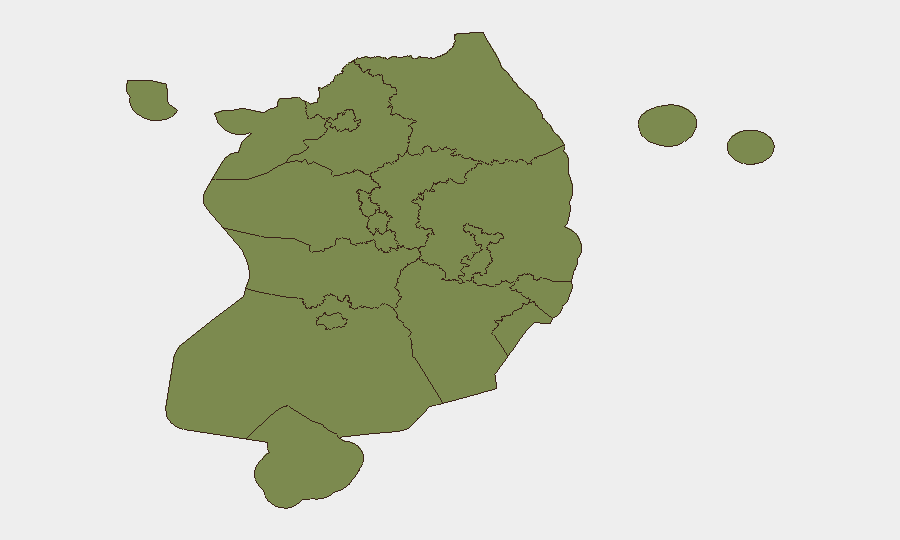
Situation Summary
South Korea presents a composite threat score of 16 with 86 tracked events, placing it outside the global top-risk tier. The security environment is characterized by sustained institutional tension around the 2024 martial law investigation, ongoing cyber vulnerabilities in government systems, and escalating diplomatic friction with Russia over NATO cooperation. No large-scale civil unrest or infrastructure disruptions have been reported in the past 48 hours, though political contestation over investigative authority and intelligence-service accountability remains active.
Key Developments
- Seoul (National Level) – 2026-07-20: Special counsel investigating former President Yoon Suk Yeol's December 2024 martial law declaration announced discovery that the National Intelligence Service issued orders deploying officials to a martial law command body, with established channels to Defense Counterintelligence Command, National Police Agency, and joint investigation headquarters. Legality verification is ongoing.
- Nationwide (Intelligence/Security) – 2026-07-20: Same special counsel confirmed it is still verifying whether NIS instructions to implement martial law were executed, indicating sustained exposure of alleged intelligence-military-police coordination in the 2024 martial law episode.
- Daejeon (Ministry of Science & ICT) – 2026-07-19–20: Industry and business media reiterated reporting on the July 6, 2026 breach of the Institute of Information & Communications Technology Planning & Evaluation's (IITP) personal-information access log management system—the second such intrusion in seven months—prompting renewed coverage of government cyber vulnerabilities.
- Seoul–Moscow Diplomatic Channel – 2026-07-18: Russia's Ministry of Foreign Affairs formally summoned the South Korean ambassador and condemned South Korea–NATO defense industry cooperation as a "threat to Russia's security," responding to President Lee Jae‑myung's NATO summit proposal and escalating external security tension.
- National Political Sphere – 2026-07-14–20 (ongoing cycle): The People Power Party held a debate on prosecution supplementary investigative authority, invoking a high-profile murder case to argue for police oversight; the discourse reflects continuing institutional contestation over law-enforcement control and politicization risk.
- Diplomatic & Cyber Intelligence (Background context since April 2026): The Korea National Diplomatic Academy's online training platform was compromised for approximately 10 months via zero-day vulnerability, potentially exposing personal data of diplomats and senior officials; the system remains not fully restored five months after shutdown, sustaining concern in current reporting cycles.
Highest-Risk Areas
Seoul (31.3) and North Chungcheong (26.2) drive the national risk ranking, with Incheon (25.7) also elevated. The concentration in the Seoul metropolitan area reflects ongoing political investigations, institutional tensions, and as the seat of government and national media, amplification of political instability signals. North Chungcheong's elevated score warrants operational attention but remains opaque in available reporting; Gyeonggi (2.9) and Busan (2.9) show lower risk despite being major population and economic centers, suggesting the ranking is primarily driven by institutional and political factors rather than localized violent crime or unrest.
How GeoBit Would Assist
Security teams would employ Entity & Network Analysis to track relationships among NIS, Defense Counterintelligence, and National Police Agency actors as the martial law investigation progresses; Intel Sweep and multi-language OSINT to monitor diplomatic and Russian messaging channels for escalation signals; and AOI Monitoring & Early Warning with persistent watches on Seoul's government districts and diplomatic zones to detect mass mobilization, protest formation, or official activity changes that might indicate institutional instability.
7-Day Outlook
The special counsel investigation is expected to continue releasing findings on intelligence-service involvement in the 2024 martial law bid, sustaining political tension but without immediate indication of civil unrest. Russia–South Korea diplomatic friction may drive rhetorical escalation but is unlikely to generate acute security incidents in the Korean peninsula in the near term. Cyber vulnerabilities in government systems, particularly around sensitive diplomatic and R&D data, will remain a persistent operational risk.
Highest-Risk Areas — Ranked
| # | State / Region | Risk |
|---|---|---|
| 1 | Seoul | 31.3 |
| 2 | North Chungcheong | 26.2 |
| 3 | Incheon | 25.7 |
| 4 | Gangwon State | 7.4 |
| 5 | South Jeolla | 4.9 |
| 6 | Gyeonggi | 2.9 |
| 7 | Busan | 2.9 |
| 8 | Jeju | 1.8 |
| 9 | Gwangju | 1.8 |
| 10 | South Chungcheong | 1.3 |
| 11 | Sejong | 1.3 |
| 12 | Jeonbuk State | 1.3 |
Sources
Previous Daily Briefs
A new South Korea brief is written every day — each with its own risk map and downloadable CSV. Here's the last week; use the calendar to go further back.
📅 Browse every day by calendar →
Highlighted days have a brief. Tap a day for that day's map & analysis, or “csv” for that day's dataset ($5).
Atlas — our AI intelligence desk — emails them this snapshot personally. Nothing else, no list.