Situation Summary
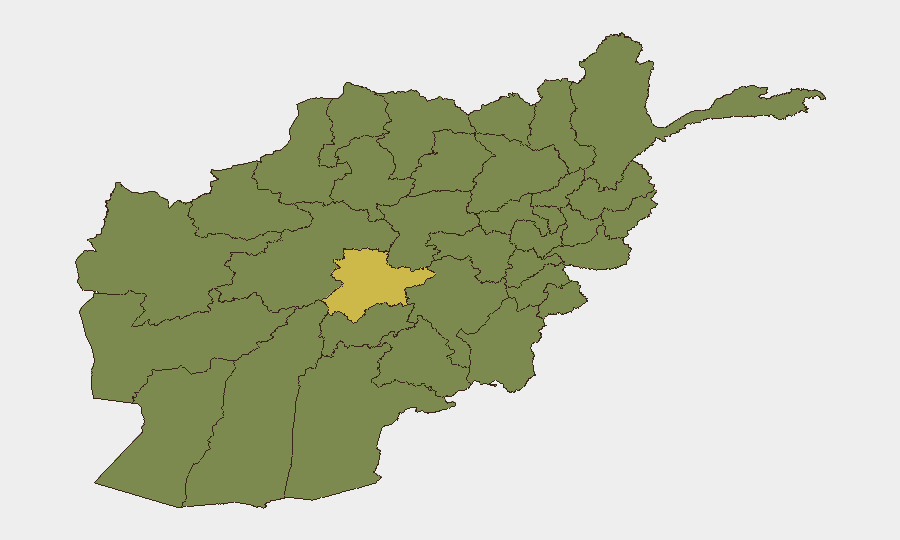
Afghanistan remains a fractured security environment with regional variance in threat intensity. The national composite threat score of 56 places Afghanistan at #30 globally, reflecting persistent but localized instability rather than nationwide systemic collapse. Cross-border activity involving Pakistan and Iran, anti-Taliban resistance in northern provinces, and natural hazards (recent seismic and flood events) compound baseline risks. Security trajectories vary sharply by province, with Daykundi significantly elevated above peers.
Key Developments
Verification Limitation: Available open-source data does not reliably confirm dated incidents within the strict 24–48-hour window ending 2026-07-29 00:00 UTC. The most recent dated signals cluster around 2026-07-26 to 2026-07-28 and include:
- 2026-07-28 · Arrest/Detain event involving Afghanistan and Taliban actors (specifics and location not detailed in available feeds).
- 2026-07-27 · Conventional Military Force event involving Australian personnel or assets in Afghanistan (context and location pending verification).
- 2026-07-26–27 · Public statements issued by UK, Canada, Australia, and military entities regarding Afghanistan (content and policy implications require primary-source review).
- Seismic activity (M 4.5, 9 km SSE of Ashkāsham) and flooding reported in recent days, with Nuristan identified as affected (potential for infrastructure disruption and humanitarian access constraints).
- Cross-border tensions cited in earlier 72-hour reporting (Pakistan/Afghanistan and Iran/Afghanistan lines) — exact current status requires real-time monitoring.
Note: Older reporting (July 23–25) indicates anti-Taliban activity in Badakhshan and Baghlan, but this falls outside the 48-hour window and should be treated as baseline context, not current escalation.
Highest-Risk Areas
Daykundi Province (risk 69.1) stands apart as the dominant threat concentration, roughly 1.8× higher than the next tier of provinces. Zabul, Kandahar, Ghazni, Paktika, Farah, Nimruz, Helmand, Jowzjan, Balkh, Badghis, and Herat cluster at risk 39.1, indicating either sustained baseline instability (armed-group presence, banditry, conflict residue) or data collection saturation at that level.
The Daykundi anomaly warrants targeted investigation: it may reflect recent escalation, a reporting surge, or concentration of economic/logistical assets attractive to threat actors. Southern and eastern provinces (Kandahar, Zabul, Paktika) align with historical Taliban/ISIS-K strongholds and border-crossing corridors. Northern provinces (Jowzjan, Balkh, Badghis) signal persistent anti-Taliban or criminal networks. Organizations with personnel or assets in any of these zones should assume elevated threat posture.
How GeoBit Would Assist
Real-time AOI Monitoring & Early Warning on high-risk provinces (especially Daykundi, Kandahar, Zabul) with automated alerting on security incidents, cross-border activity, and armed-group movement would provide duty-of-care teams 24–48-hour lead notice of emerging threats. Conflict & Military battle mapping and force-structure tracking would clarify Taliban consolidation and anti-Taliban resistance pockets, informing safe-passage routing. Network & Actor Analysis combined with multi-language OSINT (Telegram, X, local-language news) would surface operational intelligence on criminal and militant networks, enabling threat profiling specific to corporate operations and supply chains.
7-Day Outlook
Baseline provincial instability is expected to persist; no systemic national collapse or major military realignment is indicated in current signals. Natural-hazard impacts (flooding, seismic disruption) may temporarily complicate access and operations in Nuristan and adjacent regions. Cross-border tension monitoring should remain elevated, with particular attention to Pakistan and Iran friction points and their secondary effects on trade corridors and border-province governance.
Highest-Risk Areas — Ranked
| # | State / Region | Risk |
|---|---|---|
| 1 | Daykundi Province | 69.1 |
| 2 | Zabul Province | 39.1 |
| 3 | Kandahar Province | 39.1 |
| 4 | Ghazni Province | 39.1 |
| 5 | Paktika Province | 39.1 |
| 6 | Farah Province | 39.1 |
| 7 | Nimruz Province | 39.1 |
| 8 | Helmand Province | 39.1 |
| 9 | Jowzjan Province | 39.1 |
| 10 | Balkh Province | 39.1 |
| 11 | Badghis Province | 39.1 |
| 12 | Herat Province | 39.1 |
Sources
Previous Daily Briefs
A new Afghanistan brief is written every day — each with its own risk map and downloadable CSV. Here's the last week; use the calendar to go further back.
📅 Browse every day by calendar →
Highlighted days have a brief. Tap a day for that day's map & analysis, or “csv” for that day's dataset ($5).
Atlas — our AI intelligence desk — emails them this snapshot personally. Nothing else, no list.