Situation Summary
South Korea faces a moderate composite security threat (rank #null globally; score 19/100) driven by concentrated risk in Seoul and Incheon, where political friction, infrastructure incidents, and cyber threats have generated multiple signals over the past 48 hours. Recent developments include a diplomatic-network data breach, logistics-sector disruption, river flooding, and ongoing civil-military tension. The overall trajectory remains stable but with heightened volatility in the capital region and transport/supply-chain sectors.
Key Developments
- Seoul / Diplomatic sector — Jul. 21, 2026: South Korea's Foreign Ministry disclosed a cyberattack on the Korea National Diplomatic Academy exposing ~10,000 accounts of diplomatic personnel and officials. Implications for corporate networks interfacing with government bodies remain under assessment.
- Incheon — Jul. 20–21, 2026: A Coupang logistics center fire prompted evacuation orders due to structural-collapse risk; operations status ongoing. Businesses dependent on the facility face near-term fulfillment delays.
- Yeoncheon, Gyeonggi Province — Jul. 21, 2026: Heavy rainfall triggered flood warnings; 10 of 13 floodgates on the Imjin River opened as water levels rose rapidly. Road and utility infrastructure in western Gyeonggi at temporary elevated risk.
- Goseong County, Gangwon Province — Jul. 20, 2026: South Korea's Navy recovered the body of a sailor missing during a patrol near the de facto maritime border with North Korea, signaling tension in maritime operations.
- Nationwide retail — Jul. 21, 2026: Homeplus announced temporary suspension of operations at multiple locations due to funding constraints and facility maintenance issues, creating near-term travel and supply-chain disruption for consumers and logistics partners.
- South Korea / Public Administration — Jul. 21, 2026: Police announced arrests in connection with a China-based TOPIK (Korean-language proficiency test) cheating ring involving proxy test-taking and electronic devices.
Highest-Risk Areas
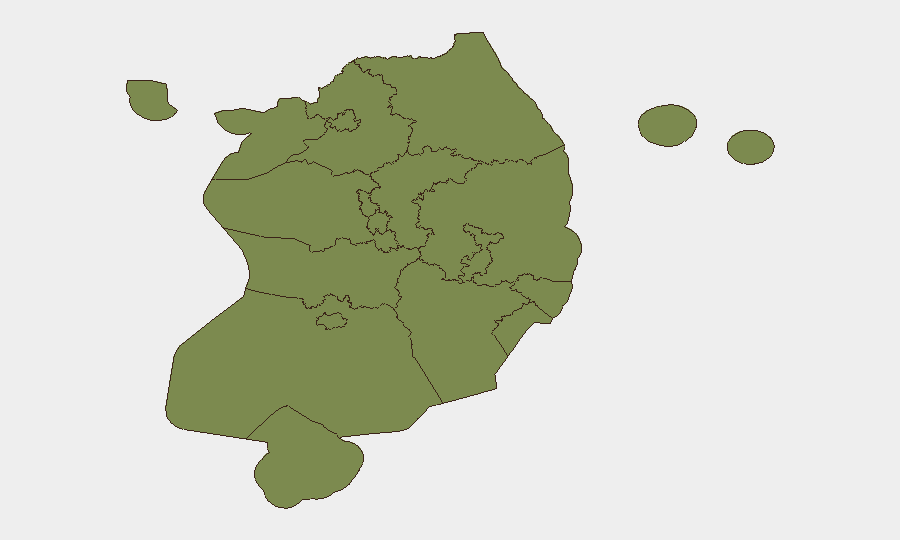
Seoul (31.3) and Incheon (26.7) account for the majority of tracked threat signals, reflecting concentration of political decision-making, diplomatic infrastructure, major ports, and logistics hubs in the capital and western corridor. North Chungcheong (18.4) shows elevated risk, though fewer active developments are confirmed in that region. All other provinces fall below risk score 7.6, indicating that corporate and duty-of-care exposure is geographically concentrated; teams with assets or personnel outside Seoul–Incheon–Gyeonggi face materially lower near-term operational risk.
How GeoBit Would Assist
Teams should leverage AOI Monitoring & Early Warning to track Seoul and Incheon for real-time alerts on political, cyber, and infrastructure incidents; multi-language search and OSINT fusion to correlate Korean-language government, media, and diplomatic sources on the cyberattack and its scope; and Routing & Network Analysis to identify alternative supply-chain and travel pathways around the Coupang disruption and flood zones. Intel Sweep and event-feed integration provide continuous baseline tracking of President–Supreme Court friction and civil-military dynamics.
7-Day Outlook
Political and administrative tensions are likely to persist, with Seoul remaining the focal point for both policy disputes and cyber/infrastructure risk. Flood recovery in Gyeonggi will progress over 3–5 days; Coupang's operational restart timeline remains uncertain. No imminent escalation to wider civil unrest or cross-border incident is signaled, but monitoring of maritime and inter-agency friction should continue.
Highest-Risk Areas — Ranked
| # | State / Region | Risk |
|---|---|---|
| 1 | Seoul | 31.3 |
| 2 | Incheon | 26.7 |
| 3 | North Chungcheong | 18.4 |
| 4 | Gyeonggi | 7.6 |
| 5 | Gangwon State | 6.3 |
| 6 | Jeonbuk State | 6.3 |
| 7 | South Jeolla | 4.7 |
| 8 | Busan | 3.8 |
| 9 | Jeju | 1.7 |
| 10 | South Chungcheong | 1.3 |
| 11 | Sejong | 1.3 |
| 12 | Daejeon | 1.3 |
Sources
Previous Daily Briefs
A new South Korea brief is written every day — each with its own risk map and downloadable CSV. Here's the last week; use the calendar to go further back.
📅 Browse every day by calendar →
Highlighted days have a brief. Tap a day for that day's map & analysis, or “csv” for that day's dataset ($5).
Atlas — our AI intelligence desk — emails them this snapshot personally. Nothing else, no list.