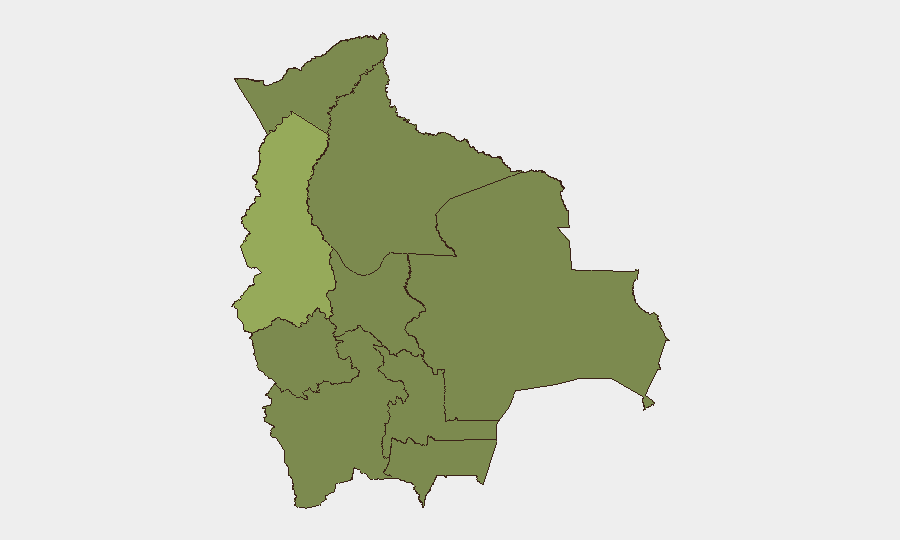
Situation Summary
Bolivia remains in a state of heightened institutional and civil tension following the June 20 declaration of a national state of emergency, which remains in force. The latest event signals indicate active political friction across executive, legislative, and military actors as of July 28–29, 2026, with concurrent labour and community-level disapproval actions. While the composite national threat score (33) places Bolivia at #46 globally, La Paz's elevated sub-national risk (53) reflects the concentration of political and security events in the capital, and blockade activity—which can mobilize rapidly—remains a credible near-term risk vector.
Key Developments
- 2026-07-29, La Paz: Commander-level public statement directed at national government signals ongoing civil-military tension at senior levels.
- 2026-07-29, La Paz: Ministry-investor public statement indicates ongoing disputes over economic or resource policy; potential impact on corporate operations.
- 2026-07-29, National: Legislative public statement reflects continued parliamentary contestation.
- 2026-07-29, La Paz: Captain-level statement versus police command suggests internal security-force friction or dispute over operational authority.
- 2026-07-28–29, La Paz: Deputy-to-deputy arrest/detention and ongoing investigation of worker issues signal intra-institutional conflict and labour grievance escalation.
- 2026-07-28, La Paz: Government-versus-bank disapproval action indicates financial-sector friction, potentially tied to liquidity or policy compliance.
- 2026-07-28, National: Army unconventional-violence incident (nature and location unspecified in available signals) requires urgent clarification and monitoring.
Note: Detailed location mapping and incident-type confirmation for the 28 July Army event are not fully specified in current signals and warrant direct follow-up.
Highest-Risk Areas
La Paz dominates the risk landscape with a score more than double the next-highest region (Potosí, 24.7), reflecting its role as the seat of government, legislative bodies, and security command. The concentration of political statements, arrests, and inter-institutional friction in La Paz indicates that executive-legislative competition and civil-military coordination failures are the primary drivers. Potosí, Beni, and the southern tier (Tarija, Chuquisaca) carry moderate but uniform risk (23–24.7), likely reflecting continued labour, indigenous, and resource-access grievances from the earlier blockade period; security teams should monitor these regions for secondary mobilization events should central political tensions escalate further.
How GeoBit Would Assist
Security teams should deploy AOI Monitoring & Early Warning on La Paz (government districts, military headquarters, legislative precincts) and Potosí to detect assembly, roadblock, or force-movement signals in real time. Intel Sweep and multi-language OSINT fusion (combining X, Telegram, local news, and radio SIGINT) will provide early indication of blockade calls or inter-agency confrontations before they escalate to operational impact. Network & Actor Analysis mapping military, legislative, and labour leadership will clarify factional positions and identify flashpoints for duty-of-care escalation.
7-Day Outlook
The frequency of high-level statements and inter-agency friction suggests elevated political instability over the coming week, with blockade mobilization remaining a credible secondary risk if legislative or executive breakdown accelerates. Security incidents at institutional level (arrests, confrontations) are likely to continue. Personnel and supply-chain teams operating in La Paz should anticipate potential mobility restrictions and maintain flexible logistics; regional operations in Potosí and Tarija should monitor labour sentiment for secondary activity.
Highest-Risk Areas — Ranked
| # | State / Region | Risk |
|---|---|---|
| 1 | La Paz | 53 |
| 2 | Potosí | 24.7 |
| 3 | Beni | 24.1 |
| 4 | Tarija | 23 |
| 5 | Pando | 23 |
| 6 | Oruro | 23 |
| 7 | Cochabamba | 23 |
| 8 | Chuquisaca | 23 |
| 9 | Santa Cruz | 23 |
Sources
Previous Daily Briefs
A new Bolivia brief is written every day — each with its own risk map and downloadable CSV. Here's the last week; use the calendar to go further back.
📅 Browse every day by calendar →
Highlighted days have a brief. Tap a day for that day's map & analysis, or “csv” for that day's dataset ($5).
Atlas — our AI intelligence desk — emails them this snapshot personally. Nothing else, no list.