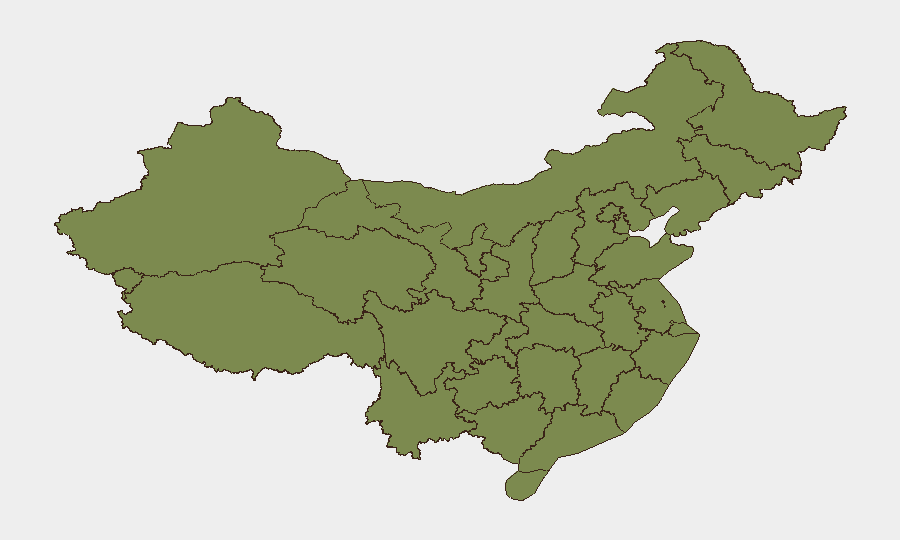
Situation Summary
China remains at composite threat rank #116 globally with no major acute civil unrest, political violence, or infrastructure crises reported in the last 24–48 hours. Current risk is driven by structural geopolitical factors (military drills, Taiwan cross-strait tensions, regulatory enforcement) rather than imminent domestic instability. Beijing's sub-national risk score (33.7) significantly exceeds all other regions, reflecting concentrated political and administrative exposure; however, overall risk trajectory remains moderate and stable.
Key Developments
- Jinjiang, Fujian Province (2026-07-23): Major fire at a shoe manufacturing facility caused significant casualties. President Xi ordered full search-and-rescue and emergency response mobilization. Local industrial zones and transport infrastructure around the facility remain disrupted pending investigation completion.
- Qingda, Shandong Province (2026-07-23): China and Russia commenced live-fire naval exercises in designated offshore waters and airspace. Drills continue through late July with announced closures of civilian maritime and aviation routes in exercise zones.
- Qingdao offshore zone, Shandong Province (2026-07-23–24): Joint exercise zone restrictions remain in effect for civilian shipping and aviation; mariners and operators require route adjustments. Low direct impact on inland movement but material for supply-chain and logistics planning.
- Nationwide (2026-07-24): China's Cyberspace Administration launched a two-month enforcement campaign targeting group livestreaming platforms, citing illegal account registration and minor exploitation. Indicates intensified online policing and potential platform raids and account seizures.
- Gansu Province (pre-24 July, ongoing 2026-07-23–24): Sixteen people remain buried following a mountainous-area landslide. Ongoing search-and-rescue operations and terrain instability may affect road access in the immediate vicinity.
- Cross-strait tensions (2026-07-23): Taiwan–China rejection event recorded; reflects ongoing diplomatic friction but no acute military escalation reported in the 24–48 hour window.
- Internal political signals (2026-07-23–24): Multiple "investigate" and "reject" events involving government, police, and ministerial actors flagged in event signals. No large-scale civil protest or political violence confirmed in open reporting; events may reflect routine administrative or legal proceedings.
Highest-Risk Areas
Beijing dominates sub-national risk at 33.7—more than double Guangdong (15.4)—reflecting concentrated presence of central government, military, and intelligence apparatus, alongside higher visibility of administrative and regulatory actions. Guangdong, Shanghai, and Shandong follow at 15.4, 10.9, and 8.7 respectively, driven by economic activity, international exposure, and military/maritime infrastructure. Tibet (9.5) and Qinghai (6.7) remain elevated due to persistent ethnic and religious tensions, though no acute incidents are reported in the current window. Risk is structural rather than crisis-driven; Beijing's premium reflects duty-of-care exposure rather than imminent instability.
How GeoBit Would Assist
Corporate teams should employ Intel Sweep and multi-language OSINT fusion to monitor emerging protests, enforcement actions, and cross-strait rhetoric in real time. AOI Monitoring & Early Warning on Beijing, Guangdong, and Shandong—coupled with maritime and aviation tracking near Qingdao—enables continuous watch on military exercises and supply-chain disruption. Routing & Network Analysis supports contingency logistics planning around ongoing exercise zones and industrial accident sites.
7-Day Outlook
Joint China–Russia naval drills are expected to continue through late July, maintaining temporary maritime and airspace restrictions near Qingdao. Cyberspace enforcement and investigative activity will likely intensify, but no escalation in civil unrest or military brinkmanship is anticipated absent external shocks. Overall risk posture for corporate operations remains moderate; focus should remain on logistics resilience and personnel safety in high-exposure cities.
Highest-Risk Areas — Ranked
| # | State / Region | Risk |
|---|---|---|
| 1 | Beijing | 33.7 |
| 2 | Guangdong Province | 15.4 |
| 3 | Shanghai | 10.9 |
| 4 | Tibet | 9.5 |
| 5 | Shandong | 8.7 |
| 6 | Sichuan | 7.8 |
| 7 | Gansu | 7.7 |
| 8 | Jiangsu | 7.5 |
| 9 | Jilin | 7.1 |
| 10 | Henan | 6.9 |
| 11 | Qinghai | 6.7 |
| 12 | Fujian | 6.7 |
Sources
Previous Daily Briefs
A new China brief is written every day — each with its own risk map and downloadable CSV. Here's the last week; use the calendar to go further back.
📅 Browse every day by calendar →
Highlighted days have a brief. Tap a day for that day's map & analysis, or “csv” for that day's dataset ($5).
Atlas — our AI intelligence desk — emails them this snapshot personally. Nothing else, no list.