Situation Summary
Russia faces escalating military pressure and domestic strain as large-scale Ukrainian drone and missile strikes intensify across multiple regions, causing civilian casualties, infrastructure damage, and disruption to critical fuel supplies. Moscow region and western border oblasts (Belgorod, Bryansk, Kursk) are experiencing sustained attack cycles with documented civilian impact. Economic indicators—including gold reserve sales, stock-market declines to 1997 levels, and bond auction failures—compound security risks, while internal reporting suggests elite fracturing over regime stability and growing recruitment-driven civil unrest.
Key Developments
- Overnight Ukrainian drone and missile campaign (July 24–25): Russia's Defense Ministry reported interception of 380–660 Ukrainian UAVs and missiles across 12+ regions, including Moscow region, Crimea, and Black/Azov Sea areas. Regional authorities confirmed fires and damage to civilian infrastructure in Podolsk, Domodedovo, and Odintsovo districts near Moscow.
- Civilian casualties in western border regions (July 24–25): At least four deaths and ~30 injuries reported in Belgorod, Bryansk, and Kursk regions from overnight strikes; Bryansk region confirmed one firefighter killed responding to infrastructure fires.
- Logistics and commercial infrastructure strike (July 24–25): Wildberries (Russia's largest e-commerce logistics provider) evacuated a major distribution center in Podolsk; multiple residential areas damaged across Moscow suburbs.
- Oil and fuel infrastructure targeting (July 24–25): Ukrainian strikes on Kantserovka oil terminal and petroleum storage depots reported; part of sustained campaign against Russian refineries contributing to documented fuel shortages and service disruptions (ambulance, waste collection) nationwide.
- Expanded naval and military asset losses (last 48 hours): Ukrainian forces report destruction of additional Russian aircraft in Kursk region and seven vessels in Black Sea, alongside strikes on air defense systems in Krasnodar Krai and occupied Zaporizhzhia.
- Recruitment-driven civil unrest (last 48 hours): Social media videos geolocated to Penza and other central Russian regions show forcible military recruitment of civilians; reported tearful separations and pressure tactics contributing to localized unrest amid mobilization and casualty pressures.
- Economic and governance stress indicators (last 48 hours): Russia sold 43.5 tonnes of gold reserves; suspended government bond auctions after repeated failures; stock market fell below initial-invasion panic levels. Prominent journalist reporting notes elite discussions of regime instability and coup scenarios.
- Cross-border Russian strike activity (early July 26): Russian missile attack on Kyiv causing fires in three districts; reflects sustained volatility in border airspace and cross-border infrastructure risk.
Highest-Risk Areas
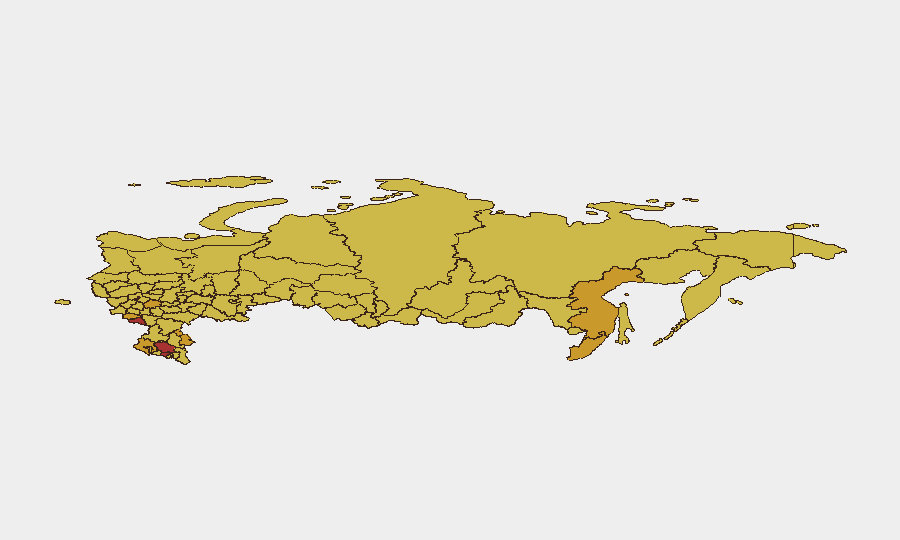
Moscow (99.7) remains the primary target and highest-risk nexus due to proximity to Ukrainian forces, concentration of logistics and critical infrastructure, and symbolic importance. Western border regions—Belgorod (76.1), Kursk (72.1), and Bryansk (not ranked but actively struck)—face direct combat spillover, civilian casualties, and infrastructure destruction. Kabardino-Balkaria (78.6) and Stavropol Krai (76.9) in the North Caucasus remain elevated due to historical insurgency risk and proximity to conflict zones. Saint Petersburg (85) is vulnerable to both drone strike and political instability given its administrative weight and vulnerable energy/naval infrastructure.
How GeoBit Would Assist
Security teams operating in or monitoring Russia should employ Intel Sweep and global event feeds for real-time strike activity and casualty reporting; AOI Monitoring & Early Warning on high-risk regions (Moscow, Belgorod, Kursk, Saint Petersburg) to detect infrastructure damage and displacement; Satellite & Imagery analysis to assess logistics-hub damage and fuel-supply chain disruption; and Regime-stability search and Network & Actor Analysis to track elite fracturing, mobilization pressure, and unrest indicators signaling political-risk acceleration.
7-Day Outlook
Ukrainian strike tempo is likely to remain elevated, targeting logistics, fuel, and military infrastructure across western and central Russia. Civilian casualties and infrastructure damage in Moscow region and border oblasts will continue. Economic strain, fuel shortages, and visible recruitment pressure will intensify domestic unrest and elite divisions, raising political-instability risk alongside kinetic threat.
Highest-Risk Areas — Ranked
| # | State / Region | Risk |
|---|---|---|
| 1 | Moscow | 99.7 |
| 2 | Saint Petersburg | 85 |
| 3 | Kabardino-Balkaria | 78.6 |
| 4 | Stavropol Krai | 76.9 |
| 5 | Belgorod Oblast | 76.1 |
| 6 | Kursk Oblast | 72.1 |
| 7 | Astrakhan Oblast | 71.5 |
| 8 | Krasnodar Krai | 71.5 |
| 9 | Primorsky Krai | 71.1 |
| 10 | Khabarovsk Krai | 71.1 |
| 11 | Ryazan Oblast | 71.1 |
| 12 | Kaliningrad | 70.6 |
Sources
Previous Daily Briefs
A new Russia brief is written every day — each with its own risk map and downloadable CSV. Here's the last week; use the calendar to go further back.
📅 Browse every day by calendar →
Highlighted days have a brief. Tap a day for that day's map & analysis, or “csv” for that day's dataset ($5).
Atlas — our AI intelligence desk — emails them this snapshot personally. Nothing else, no list.