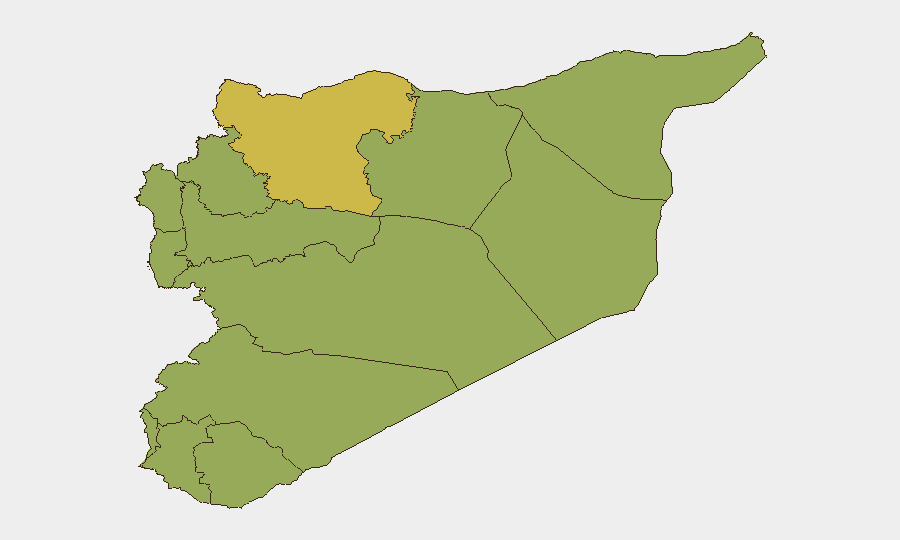
Situation Summary
Syria remains in a state of acute fragmentation marked by domestic civil unrest, localized armed clashes, and active cross-border military operations. The composite threat score of 70 places the country at rank #17 globally, with military strikes as the primary driver. Over the past 48 hours, security forces have engaged armed groups in northwestern Aleppo, violent protests demanding accountability for former regime figures have erupted in Damascus with reported fatalities, and Israeli strikes have targeted regime military positions in southern Syria. The security environment reflects competing pressures: state consolidation efforts, sectarian and political tensions, residual criminal and tribal violence, and external military intervention.
Key Developments
- Azaz, Aleppo Governorate (Saturday, 25 July, evening local time): Security forces exchanged heavy gunfire with armed gunmen during a drug-trafficking enforcement operation; clashes spread across multiple neighborhoods, followed by mass protests and reinforced security deployments. SOHR and local sources confirm civilians were exposed to extended firefights when armed suspects resisted surrender.
- Damascus, Alawite-majority districts (Friday–Saturday, 24–25 July): Anti-Assad demonstrations escalated into violence, with protesters attacking shops and vehicles in sectarian-majority neighborhoods. Reports indicate 3 deaths and 60 injured across Damascus protest activity within the last 48 hours.
- Southern Syria, near Golan Heights (early 24–25 July): Israeli military conducted strikes on Syrian regime military headquarters and weapons depots in response to earlier attacks on civilians, as confirmed by Israeli military statements. Operations remain active in this sector.
- Manbij, eastern Aleppo countryside (Tuesday, 21 July): A member of interim government forces was killed by hand grenade explosion; incident remains relevant to current threat posture in northeastern Aleppo.
- Daraa countryside, al-Harah (21 July): An Internal Security Forces member was accidentally shot and killed, reflecting ongoing operational tension and weapon-handling incidents within security apparatus.
- Damascus countryside, multiple locations (21 July): Criminal violence continued across Sabina (shooting near al-Jisr station), al-Qutayfah (motorcycle gunmen killing), and Sweida province (woman killed by gunshot), indicating active criminal networks and personal violence.
- Deir ez-Zor province, al-Izbah (21 July): Armed tribal clashes over local disputes resulted in one death, consistent with ongoing resource and territorial disputes in eastern Syria.
- Humanitarian pressure (ongoing): Over 460,000 displaced persons from Lebanon have entered Syria; flooding along the Euphrates is compounding infrastructure strain and elevating risk in Aleppo and northeast sectors.
Highest-Risk Areas
Damascus Governorate (78.9) dominates the sub-national ranking, driven by ongoing political violence, sectarian tensions, and volatile protest activity targeting former regime networks. Aleppo Governorate (66.5) ranks second, reflecting active armed clashes between security forces and criminal/militant groups in northwestern sectors (Azaz) and humanitarian strain from displacement influx. Lattakia, Daraa, and Tartus governorates follow (55.9–48.9), with Daraa and southern Syria experiencing repeated Israeli military strikes and cross-border instability. The concentration of risk in Damascus and Aleppo reflects the state's struggle to consolidate security while managing sectarian grievances and criminal networks; southern risk is driven by external military pressure and the occupation context.
How GeoBit Would Assist
Teams with personnel or assets in Syria should deploy AOI Monitoring & Early Warning for Damascus, Aleppo, and southern Daraa to detect protest escalation, security force mobilization, and cross-border strike patterns in near-real time. OSINT fusion (X/Telegram monitoring, multi-language event feeds, and sentiment analysis) on anti-regime and sectarian messaging will signal when demonstrations are likely to turn violent. GIS & Spatial Analysis paired with conflict battle mapping can isolate safe corridors and identify neighborhoods under active security operations, enabling duty-of-care route planning and asset repositioning.
7-Day Outlook
Expect continued volatility in Damascus as political accountability demands collide with state efforts to prevent sectarian revenge cycles; security force operations against criminal networks will likely generate further clashes and protests in Aleppo and surrounding countryside. Israeli military pressure on southern Syria will persist, maintaining travel and operational risk near the Golan and in Daraa. Humanitarian inflows and infrastructure strain will worsen security fragmentation in northern and eastern regions over the next week.
Highest-Risk Areas — Ranked
| # | State / Region | Risk |
|---|---|---|
| 1 | Damascus Governorate | 78.9 |
| 2 | Aleppo Governorate | 66.5 |
| 3 | Lattakia Governorate | 55.9 |
| 4 | Dar'a Governorate | 52.4 |
| 5 | Tartus Governorate | 48.9 |
| 6 | UNDOF | 48.9 |
| 7 | Al-Quneitra Governorate | 48.9 |
| 8 | Idleb Governorate | 48.9 |
| 9 | Hama Governorate | 48.9 |
| 10 | Ar-Raqqa Governorate | 48.9 |
| 11 | Homs Governorate | 48.9 |
| 12 | Rif Dimashq Governorate | 48.9 |
Sources
Previous Daily Briefs
A new Syria brief is written every day — each with its own risk map and downloadable CSV. Here's the last week; use the calendar to go further back.
📅 Browse every day by calendar →
Highlighted days have a brief. Tap a day for that day's map & analysis, or “csv” for that day's dataset ($5).
Atlas — our AI intelligence desk — emails them this snapshot personally. Nothing else, no list.