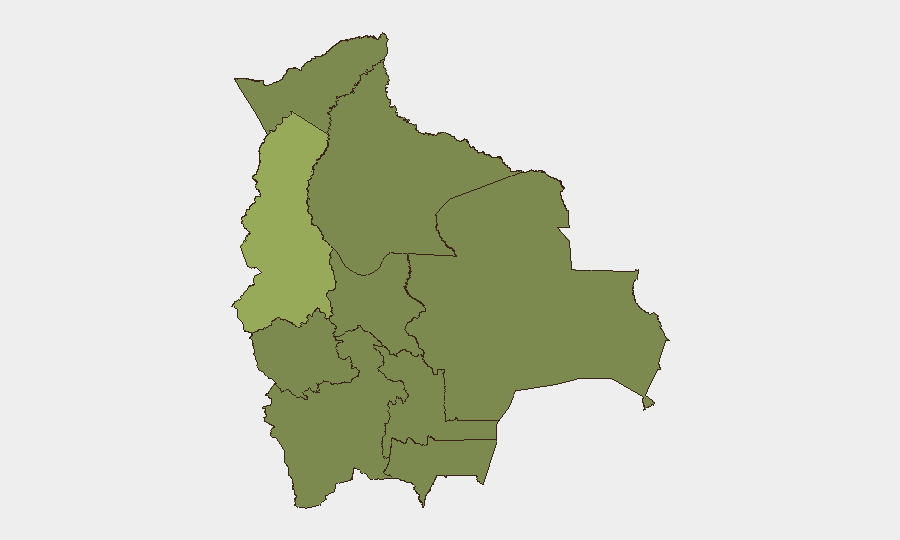
Situation Summary
Bolivia remains a composite-threat environment (global rank #42, score 36) characterized by residual civil-unrest tensions from the 53-day road blockades (May–June), ongoing prosecutions of protest leaders, and elevated street crime. La Paz dominates the risk profile (score 55), driven by political friction and administrative volatility, while Cochabamba (score 30) has emerged as a near-term hotspot for organized armed robbery targeting currency exchangers and businesses. The trajectory is one of gradual normalization following the June state-of-emergency declaration, but with persistent vulnerability to sudden protest mobilization and criminal opportunism in major urban centers.
Key Developments
- Cochabamba city, multiple zones (Sacaba/El Castillo, Ayacucho bus terminal, house-of-exchange; 30 Jul, evening): Three separate armed robberies targeting currency exchangers occurred within hours. One *librecambista* (street money-changer) was shot and injured in Sacaba; a second was killed by gunshot wounds at the Ayacucho terminal after cash theft; a third robbery at an unspecified exchange house resulted in cash and phone theft. Police attributed the incidents to multiple criminal groups operating in a coordinated or opportunistic wave, signaling elevated armed-robbery and extortion risk in Cochabamba's commercial zones.
- La Paz city (Felcc police detention; 30 Jul): Campesino leader Vicente Salazar, executive of the Federación Túpac Katari, was arrested pending prosecution for his alleged role in the May–June road blockades. His lawyer filed a habeas-corpus motion, maintaining political tension and risk of renewed protest mobilization tied to civil-unrest prosecutions.
- La Paz department, Viacha cemetery (Saihuani; 29–30 Jul): Police opened a criminal investigation following discovery of two abandoned fetuses in a cemetery. Classification and investigation scope remain unclear, but underscore crime-investigation activity and potential serious-crime concerns in La Paz periphery.
- La Paz department, Guanay River (29–30 Jul): A station wagon fell into the Guanay River, resulting in one fatality. While primarily an accident, the incident reflects infrastructure and travel hazards on rural routes in La Paz, particularly near ravines and waterways.
- German Embassy travel advisory (updated late July; nationwide Chapare region): Foreign diplomatic missions continue to advise against travel to the Chapare (Cochabamba), citing unresolved protest risk, potential road blockades, and security-force operations. Although the June state-of-emergency enabled clearance of major blockades, risk of renewed closures and localized clashes with security forces remains across multiple departments.
Highest-Risk Areas
La Paz (score 55) significantly outpaces other departments, driven by political volatility, administrative authority concentration, and prosecutions of prominent protest figures. Potosí (37.3) and Cochabamba (30) follow, with Cochabamba showing acute near-term risk from organized armed crime targeting commercial and financial sectors. The remaining departments cluster in the 25–26.5 range, indicating dispersed but lower-intensity risk. Urban commercial corridors in La Paz and Cochabamba warrant heightened asset-protection protocols.
How GeoBit Would Assist
Security teams would employ AOI Monitoring & Early Warning for persistent surveillance of La Paz administrative zones and Cochabamba commercial districts to detect protest mobilization or crime-pattern escalation; OSINT Fusion & Corroboration to track protest-leader prosecutions and civil-unrest rhetoric across social media and local news; and Routing & Network Analysis to identify secure alternative routes around known blockade-prone highways and high-crime zones for personnel and supply movement.
7-Day Outlook
Prosecutions of blockade leaders will likely sustain low-level political tension without triggering immediate large-scale mobilization. Cochabamba armed-robbery activity may continue absent targeted police interdiction. No imminent nationwide crisis indicators are present, but protest-sympathizer networks remain mobilizable and should be monitored for rhetoric shifts or coordination signals.
Highest-Risk Areas — Ranked
| # | State / Region | Risk |
|---|---|---|
| 1 | La Paz | 55 |
| 2 | Potosí | 37.3 |
| 3 | Cochabamba | 30 |
| 4 | Tarija | 26.5 |
| 5 | Beni | 26.5 |
| 6 | Pando | 25 |
| 7 | Oruro | 25 |
| 8 | Chuquisaca | 25 |
| 9 | Santa Cruz | 25 |
Sources
Previous Daily Briefs
A new Bolivia brief is written every day — each with its own risk map and downloadable CSV. Here's the last week; use the calendar to go further back.
📅 Browse every day by calendar →
Highlighted days have a brief. Tap a day for that day's map & analysis, or “csv” for that day's dataset ($5).
Atlas — our AI intelligence desk — emails them this snapshot personally. Nothing else, no list.