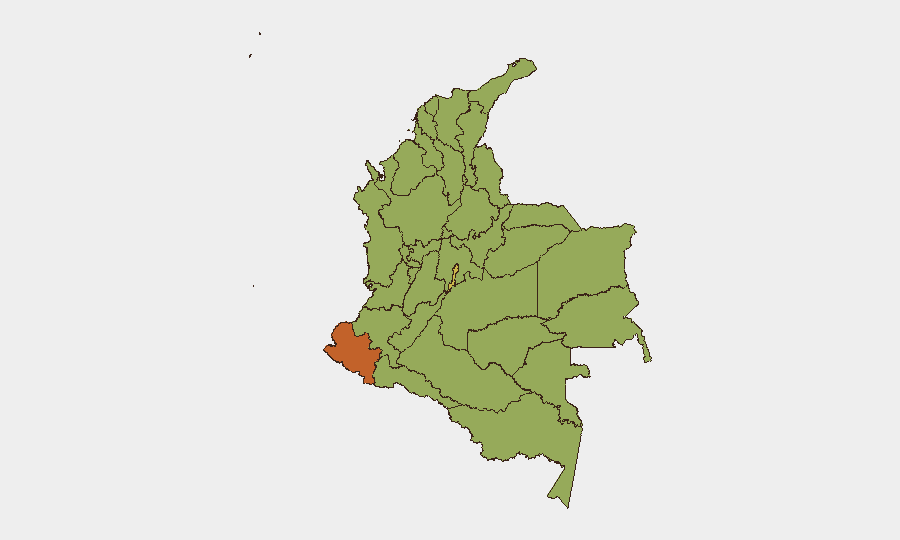
Situation Summary
Colombia remains at #32 global threat ranking (score 65), driven primarily by ongoing insurgency, organized violence, and criminal gang activity across multiple regions. Over the past 48 hours, security incidents have clustered in Valle del Cauca, Antioquia, and Norte de Santander, including targeted shootings, police operations against extortion syndicates, and guerrilla kidnapping on transport corridors. Authorities have issued warnings of coordinated attacks against security forces nationwide, indicating elevated operational tempo among armed groups.
Key Developments
- Medellín (Antioquia) – targeted motorcycle shooting. Two armed assailants carried out a daylight shooting in downtown commercial sector Friday afternoon, killing a 26-year-old male and critically injuring another; assailants fled via side street. (past 48 hours)
- Rural Cali (Valle del Cauca) – police-extortion gang firefight. National Police anti-kidnapping units engaged armed suspects at a safehouse Friday morning; two suspects killed, no police or civilian casualties reported. Incident confirms active extortion networks in Valle del Cauca periphery. (past 48 hours)
- Cartago (Valle del Cauca) – multi-victim gang shooting. Five killed and two children injured in reported gang-related confrontation; ongoing investigation. (past 48 hours)
- Buenaventura–Docordó river corridor (Chocó/Valle del Cauca) – ELN kidnapping and rescue. Colombian Navy rescued nine civilians kidnapped by ELN guerrillas from public transport boat on Pacific river route; incident highlights persistent risk on riverine transit corridors. (past 48 hours)
- Dagua (Valle del Cauca) – police officer recovered. National Police patrolman Eleazar Esmith Vargas Ladino released after kidnapping by FARC dissident elements; reflects targeting of uniformed personnel by insurgent groups in rural Valle del Cauca. (past 48 hours)
- Tibú, Catatumbo region (Norte de Santander) – military explosives operation. Army units destroyed FARC dissident explosives depot and neutralized approximately 180 anti-personnel mines during coca eradication operations. (past 48 hours)
- San Antonio del Tequendama (Cundinamarca) – triple homicide arrest. Police arrested alleged perpetrator in killing of two elderly victims and a 17-year-old; reflects ongoing street violence in central Cundinamarca. (past 24–48 hours)
- National-level alert – coordinated attacks on security forces. Authorities issued warning of possible coordinated "gun plan" targeting police and military across multiple regions, following multiple recent attacks on uniformed personnel. (past 24 hours)
Highest-Risk Areas
Nariño (75.3) leads sub-national risk, followed by Capital District (61.9) and Atlántico (59.4). Valle del Cauca (58.2) shows acute immediate risk based on current incident clustering—extortion gangs, kidnapping by ELN and FARC dissidents, and gang shootings over the past 48 hours concentrate in this department. Norte de Santander (Catatumbo region) and Chocó remain high-threat due to guerrilla presence and trafficking corridors. Antioquia remains volatile, with Medellín commercial sectors exposed to contract killings. Risk drivers include drug-trafficking competition, extortion operations targeting civilians and security forces, and ELN/FARC dissident kidnapping activity.
How GeoBit Would Assist
Corporate security teams should employ AOI Monitoring & Early Warning on high-risk departments (Valle del Cauca, Nariño, Antioquia) with real-time alerting on event signals (arrests, violence clusters, military mobilization). Routing & Network Analysis would identify safer transport corridors, particularly on Buenaventura river routes and rural roads in Cauca Valley. Conflict & Military tracking combined with Network & Actor Analysis would clarify active armed group positions and kidnapping/extortion syndicate operations by region.
7-Day Outlook
Incident frequency and the national alert on coordinated security-force attacks suggest operational momentum remains high among both criminal and insurgent actors through early August. Valle del Cauca and rural Antioquia should be treated as elevated-risk zones for staff movement. No near-term political or military developments indicate de-escalation; routine incident monitoring and route-level risk reassessment are warranted.
Highest-Risk Areas — Ranked
| # | State / Region | Risk |
|---|---|---|
| 1 | Nariño | 75.3 |
| 2 | Capital District | 61.9 |
| 3 | Atlántico Department | 59.4 |
| 4 | Valle del Cauca Department | 58.2 |
| 5 | Amazonas | 48.7 |
| 6 | Cauca | 46.2 |
| 7 | Bolívar Department | 45.9 |
| 8 | Chocó Department | 45.6 |
| 9 | Risaralda Department | 45.6 |
| 10 | Tolima Department | 45.6 |
| 11 | Cundinamarca Department | 45.6 |
| 12 | Huila Department | 45.6 |
Sources
Previous Daily Briefs
A new Colombia brief is written every day — each with its own risk map and downloadable CSV. Here's the last week; use the calendar to go further back.
📅 Browse every day by calendar →
Highlighted days have a brief. Tap a day for that day's map & analysis, or “csv” for that day's dataset ($5).
Atlas — our AI intelligence desk — emails them this snapshot personally. Nothing else, no list.