Situation Summary
Iraq faces acute escalation risk following U.S.–Saudi joint airstrikes on July 29 against Iran-aligned militia bases, which killed at least 20 PMF fighters and struck multiple locations including Baghdad. The strikes were executed in response to over 30 IRGC-directed drone attacks in the preceding 72 hours, signaling a widening U.S.–Iran proxy conflict now directly involving Iraqi territory. Baghdad Governorate (risk 87.4) remains the highest-risk zone, compounded by heightened alert at government facilities and emergency security mobilization nationwide. Iraqi leadership is attempting to reassert state control and prevent further cross-border operations, but militia factions' operational capacity and political weight pose sustained friction.
Key Developments
- Eastern Iraq (PMF bases) – July 29, 2026: U.S. Central Command and Saudi armed forces conducted joint airstrikes on Iran-backed Popular Mobilization Forces logistics and weapons sites across eastern Iraq. PMF reported 20 killed and 32 wounded; strikes hit headquarters in Baghdad and six additional locations.
- Baghdad, Green Zone – late July 29, 2026: Iraqi security personnel fired on an unidentified drone over the heavily fortified Green Zone, assessing it as surveillance-related. No casualties reported; incident reflects elevated alert around government and diplomatic facilities post-strike.
- Baghdad, National Security Council – July 29, 2026: Prime Minister Ali Falih al-Zaidi chaired emergency session condemning the airstrikes as sovereignty violations. Council ordered new security plan to prevent airspace/territory breaches and instructed Foreign Ministry to pursue international legal action.
- Eastern border crossings and strategic corridors – July 29–30, 2026: Iraqi authorities deployed additional security forces to key border crossings and transport routes to prevent further drone/missile launches from Iraqi soil and secure trade corridors amid regional escalation.
- Baghdad political leadership meetings – July 29–30, 2026: Prime Minister convened meetings with senior political and militia figures to manage fallout, reassure factions, and discuss Iraq's stance toward both U.S. and Iran-aligned actors. Messaging focused on keeping Iraq out of U.S.–Iran/Saudi confrontation while asserting state control over weapons.
- Erbil warehouses – July 30, 2026: Fires at two warehouses in Erbil were attributed to safety violations rather than direct attack. Civil defense responded; incidents caused localized infrastructure and business disruption in the Kurdistan Region.
Highest-Risk Areas
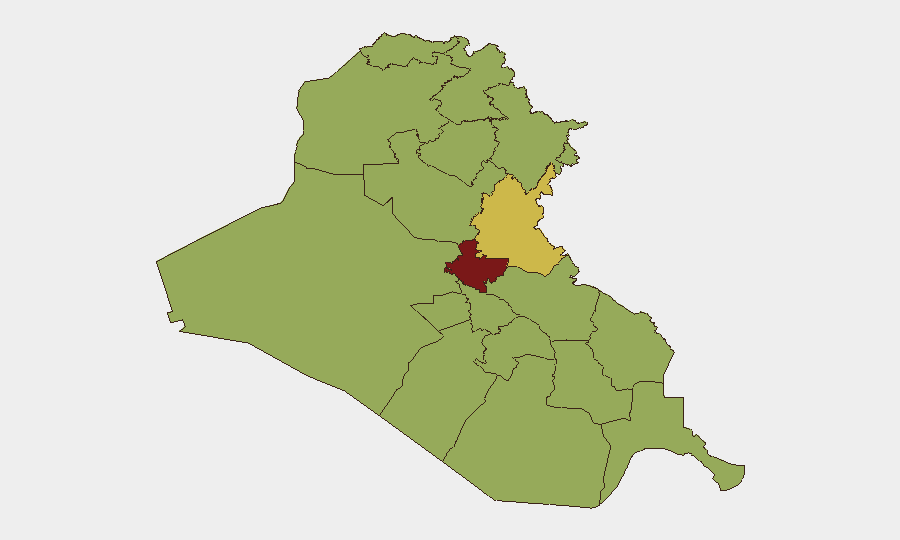
Baghdad Governorate (87.4) dominates Iraq's risk profile, driven by proximity to PMF leadership, strategic government facilities, and the concentration of both militia and state security assets. Diyala (64.7) follows as the second-highest-risk zone, reflecting its role as a transit corridor for militia logistics and ongoing militia presence. Erbil (58.7) and Kirkuk (58.2), while lower-ranked, host significant civilian and commercial activity; Erbil's Kurdish regional autonomy and energy infrastructure add complexity. The remaining southern and central governorates cluster at 57.4, indicating baseline elevated risk from militia activity, sectarian tensions (reflected in recent Christian–Islamic friction signals), and limited state capacity in remote areas.
How GeoBit Would Assist
Corporate security teams should deploy persistent Area-of-Interest (AOI) monitoring on Baghdad Governorate, PMF-linked facilities, and key border crossings to trigger early warnings of drone/missile activity or militia mobilization. Network & Actor Analysis combined with X/Telegram OSINT and multi-language sentiment tracking will track militia leadership statements and factional responses to escalation in real time. Satellite & Imagery analysis and GIS-based routing assessment enable teams to identify safe transit corridors and assess facility exposure to airspace incursions.
7-Day Outlook
Immediate risk of further U.S.–Saudi strikes remains elevated if Iran-backed groups resume drone attacks; retaliatory rhetoric from militia factions is likely but kinetic response capability is degraded post-July 29. Iraqi state security deployments and diplomatic positioning suggest Baghdad will attempt to de-escalate, though militia autonomy limits government enforcement. Monitor for secondary effects: border instability, disrupted supply chains, and localized sectarian friction in mixed-population areas.
Highest-Risk Areas — Ranked
| # | State / Region | Risk |
|---|---|---|
| 1 | Baghdad Governorate | 87.4 |
| 2 | Diyala Governorate | 64.7 |
| 3 | Erbil Governorate | 58.7 |
| 4 | Kirkuk Governorate | 58.2 |
| 5 | Karbala | 57.6 |
| 6 | Babil Governorate | 57.4 |
| 7 | Wasit Governorate | 57.4 |
| 8 | Al-Qadisiyah Governorate | 57.4 |
| 9 | Dhi Qar Governorate | 57.4 |
| 10 | Al-Muthanna Governorate | 57.4 |
| 11 | Maysan Governorate | 57.4 |
| 12 | Al-Basra Governorate | 57.4 |
Sources
Previous Daily Briefs
A new Iraq brief is written every day — each with its own risk map and downloadable CSV. Here's the last week; use the calendar to go further back.
📅 Browse every day by calendar →
Highlighted days have a brief. Tap a day for that day's map & analysis, or “csv” for that day's dataset ($5).
Atlas — our AI intelligence desk — emails them this snapshot personally. Nothing else, no list.