Situation Summary
Pakistan faces sustained militant pressure across its northwestern and southwestern border regions, with security forces conducting intensive counter-terrorism operations in late July 2026 that have resulted in over 30 confirmed militant deaths. The broader threat environment remains driven by cross-border insurgency, localized sectarian and nationalist armed groups, and deteriorating state capacity in Khyber Pakhtunkhwa and Balochistan. As of early August 2026, no verified multi-source reporting exists for specific security incidents dated 1–2 August; however, the trajectory of late-July violence suggests sustained operational tempo by militant networks and heightened kinetic response from Pakistan's armed and police forces.
Key Developments
Data Limitation Notice: Credible, multi-sourced Pakistani security reporting is currently available only through 29–30 July 2026. No verifiable incidents have been confirmed for 1–2 August 2026 across mainstream and specialist sources. The following represent the most recent confirmed developments:
- Hangu district, Khyber Pakhtunkhwa – 30 July 2026: Islamist militants executed a drone-assisted attack and ambush on a police checkpoint using IED-laden quadcopters and small-arms fire; at least 10 police officers and 15 militants killed in hours-long engagement, per provincial police and Reuters.
- Khyber district, Khyber Pakhtunkhwa – 28–29 July 2026: Pakistan's military conducted intelligence-based area sanitization operations, killing 24 militants identified as part of "Fitna al-Khawarij"; weapons, ammunition, and IED components were seized.
- Nushki district, Balochistan – 29 July 2026: Security forces engaged militants in firefights, killing 8 fighters linked to "Fitna al-Hindustan" and recovering weapons and IED materials, per ISPR official statements.
- Nationwide Counter-Terrorism Operations – 29 July 2026: ISPR announced elimination of 32 militants across coordinated operations in the preceding 24 hours, reflecting an uptick in attacks on military and police infrastructure.
Highest-Risk Areas
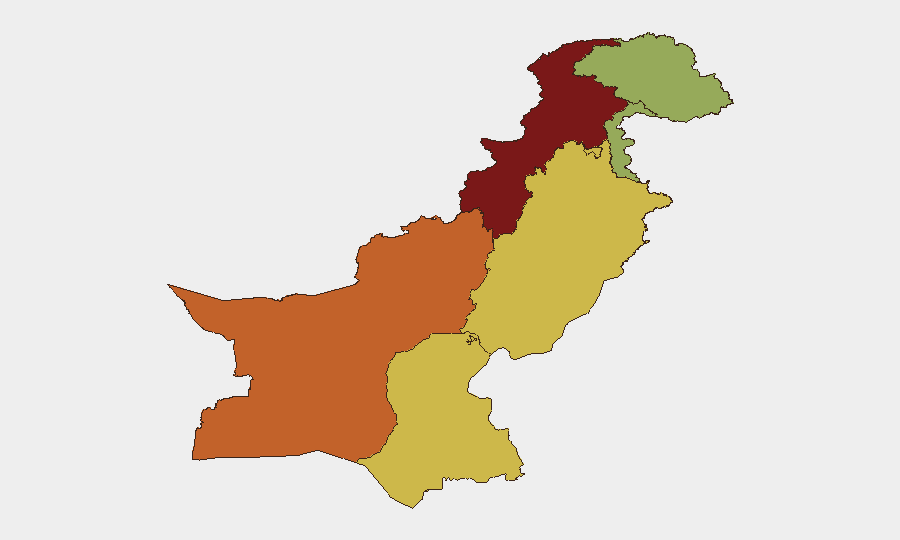
Khyber Pakhtunkhwa (risk 80.1) and Balochistan (risk 75.4) dominate Pakistan's threat landscape and drive the country's #17 global ranking. Both regions host entrenched militant networks with cross-border safe havens, active drone and IED capabilities, and demonstrated capacity to sustain coordinated multi-location attacks. Sindh (70.5) and Punjab (65.9) face secondary but significant urban-crime and sectarian risks, while Islamabad Capital Territory (64.7) remains exposed to spillover from northwest insurgency despite heavy security presence. The concentration of high-risk activity in the border provinces reflects both geography and state-capacity constraints in counter-terrorism enforcement.
How GeoBit Would Assist
Organizations with personnel or assets in Pakistan should employ AOI Monitoring & Early Warning on Khyber Pakhtunkhwa and Balochistan districts to receive real-time alerts on militant activity patterns and security-force operations. Network & Actor Analysis capabilities enable identification of command structures and operational cells behind recent drone-assisted attacks and multi-district coordination. Routing & Network Analysis can generate secure, threat-aware travel corridors for staff movement between high-risk zones, while Intel Sweep and OSINT fusion maintain current awareness of emerging group statements and claimed attacks before mainstream media confirmation.
7-Day Outlook
Militant operational tempo is expected to remain elevated through mid-August, with particular risk in Khyber Pakhtunkhwa's Hangu and Khyber districts following recent successful attacks on security infrastructure. Pakistani security forces are likely to sustain kinetic counter-operations, creating secondary risks of civilian proximity to firefights and checkpoint disruptions. No major de-escalation indicators are apparent; duty-of-care teams should maintain heightened vigilance and real-time situation awareness in northwestern and southwestern zones.
Highest-Risk Areas — Ranked
| # | State / Region | Risk |
|---|---|---|
| 1 | Khyber Pakhtunkhwa | 80.1 |
| 2 | Balochistan | 75.4 |
| 3 | Sindh | 70.5 |
| 4 | Punjab | 65.9 |
| 5 | Islamabad Capital Territory | 64.7 |
| 6 | Azad Kashmir | 53.4 |
| 7 | Gilgit-Baltistan | 51 |
Sources
Previous Daily Briefs
A new Pakistan brief is written every day — each with its own risk map and downloadable CSV. Here's the last week; use the calendar to go further back.
📅 Browse every day by calendar →
Highlighted days have a brief. Tap a day for that day's map & analysis, or “csv” for that day's dataset ($5).
Atlas — our AI intelligence desk — emails them this snapshot personally. Nothing else, no list.