Situation Summary
South Korea remains at composite threat level 5 (rank #130 globally) with 95 tracked events, but faces acute near-term risks concentrated in Seoul and surrounding regions. A major cyber breach at the Korea National Diplomatic Academy—affecting ~6,000 diplomat records and potentially linked to North Korean state actors—has elevated diplomatic and national-security concern over foreign cyber operations targeting state infrastructure. Concurrent political instability (Seoul mayor appeal, prosecutorial reform disputes) and a high-profile police misconduct scandal add institutional friction and reputational risk to law-enforcement and governance. Regional alignment with the U.S. and Japan on deterrence and cyber defense is ongoing but occurs against a backdrop of deepening North Korea–China–Russia coordination, raising medium-term tension and cyber-threat vectors.
Key Developments
- Seoul | July 21–23 – Foreign Ministry disclosed a "significant" data breach at the Korea National Diplomatic Academy; approximately 6,000 current and former diplomat records exposed via zero-day exploit. Server compromise spanned April 2025–February 2026. Investigators examining possible North Korean state-linked attribution; insufficient technical evidence to confirm, but intelligence coordination ongoing across multiple agencies.
- Seoul | July 23 – Seoul Mayor Oh Se-hoon formally appealed a first-instance court ruling ordering removal from office over allegations of supporter-funded opinion polling. Legal proceedings will continue; potential removal and partisan tensions ahead of electoral cycles create near-term governance uncertainty in the capital.
- Gwangju (Gwangsan District) | July 22–23 – Police investigation into handling of sexual assault and stalking case ("Jang Yoon-gi case") escalated from local Gwangsan Police Station to National Office of Investigation. Public outcry over alleged single-warning-text response reflects growing scrutiny of victim-protection protocols and law-enforcement credibility nationwide.
- National Level | July 23 – Democratic Party's push to abolish prosecutors' supplementary investigation powers faces resistance from multiple stakeholders; legal-institutional friction persists over reform scope and implementation, with potential for strikes or protests among justice-sector professionals.
- Nationwide | July 21–23 – U.S. military conventional-force statements and trilateral South Korea–U.S.–Japan foreign-ministers coordination on denuclearization, deterrence, cyber security, and SMR cooperation emphasize regional alignment against North Korea–China–Russia coordination, with implications for air routes, trade, and diplomatic posture.
- Central Election Commission & Server Infrastructure | July 23 – Property seizure/damage incidents reported; context and scope require further clarification but suggest potential targeting of electoral or critical digital infrastructure.
Highest-Risk Areas
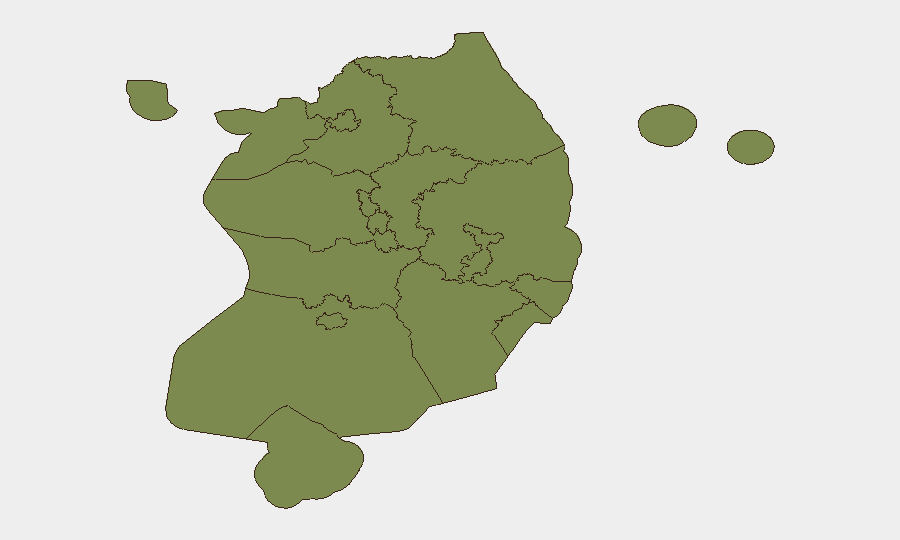
Seoul dominates the risk landscape (31.4), driven by diplomatic-cyber compromise, political instability, and concentration of national institutions and foreign presence. North Gyeongsang (14.2) and South Chungcheong (13.2) rank second and third, likely reflecting proximity to the DMZ, military infrastructure, and industrial concentrations. Gyeonggi (9.8) and Incheon (8.8) follow, reflecting Seoul's metropolitan halo and transport/logistics nodes. Risk declines sharply in southern and eastern regions, with Busan, South Jeolla, and peripheral areas at 3.4 or below, suggesting localized rather than nationwide distribution of current threats.
How GeoBit Would Assist
Security teams should deploy Intel Sweep and OSINT fusion to monitor North Korean hacking groups, attribution intelligence, and diplomatic-sector targeting patterns; Cyber & Network Actor Analysis to track tactics, techniques, and infrastructure tied to the academy breach; and AOI Monitoring & Early Warning on Seoul, Gwangju, and National Police/Justice sector entities to detect escalation in police misconduct, prosecutorial reform protests, or electoral-integrity incidents. Multi-language search and sentiment analysis of Korean media, civic platforms, and legal-professional forums will provide early signals of institutional instability or labor actions.
7-Day Outlook
The diplomatic-cyber investigation will likely remain active and fluid; attribution and damage scope may be clarified but foreign state involvement (especially North Korea) will remain plausible without definitive forensic confirmation. Political and institutional tensions—mayor's appeal, justice-reform disputes, police credibility—will sustain media and street-level friction but are unlikely to escalate to violence absent major court rulings or policy reversals. Cyber-threat posture against foreign ministry, financial, and electoral infrastructure will remain elevated; defensive posture and awareness among diplomatic and government IT teams should be expected to tighten.
Highest-Risk Areas — Ranked
| # | State / Region | Risk |
|---|---|---|
| 1 | Seoul | 31.4 |
| 2 | North Gyeongsang | 14.2 |
| 3 | South Chungcheong | 13.2 |
| 4 | Gyeonggi | 9.8 |
| 5 | Incheon | 8.8 |
| 6 | Jeonbuk State | 7.8 |
| 7 | Busan | 3.4 |
| 8 | South Jeolla | 1.9 |
| 9 | North Chungcheong | 1.4 |
| 10 | Gangwon State | 1.4 |
| 11 | Jeju | 1.4 |
| 12 | Sejong | 1.4 |
Sources
Previous Daily Briefs
A new South Korea brief is written every day — each with its own risk map and downloadable CSV. Here's the last week; use the calendar to go further back.
📅 Browse every day by calendar →
Highlighted days have a brief. Tap a day for that day's map & analysis, or “csv” for that day's dataset ($5).
Atlas — our AI intelligence desk — emails them this snapshot personally. Nothing else, no list.