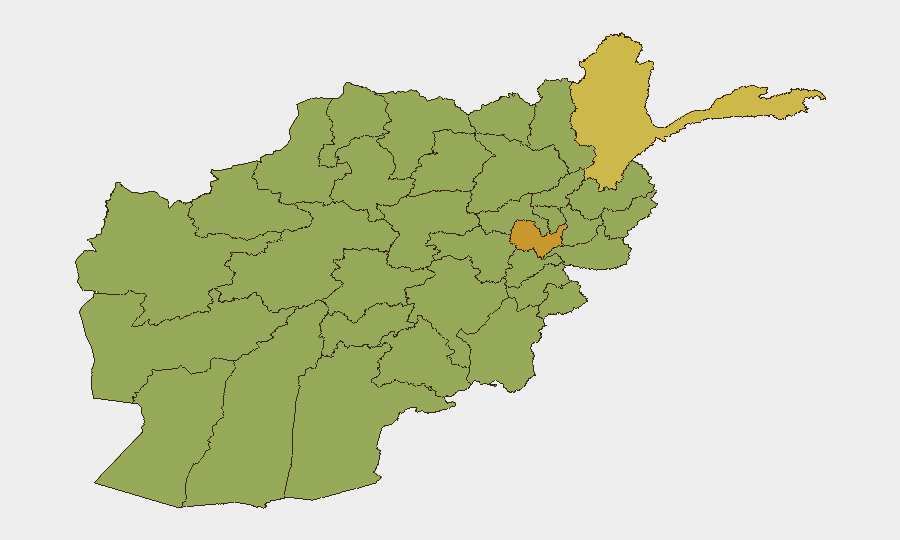
Situation Summary
Afghanistan remains at moderate-to-high risk (global rank #32, composite score 59) with 51 tracked security events this reporting period. The security picture is driven by persistent clashes between Taliban forces and the Afghanistan Freedom Front (AFF) in the northeast, particularly Badakhshan and Baghlan provinces, coupled with internal Taliban factionalism and strained relations between the administration and police. The trajectory over the past 48 hours shows localized but sustained armed contestation rather than systemic collapse, though frontline volatility in border regions creates acute hazards for transit and stationary assets.
Key Developments
- Badakhshan Province, Zibak District (July 30–31, 2026): Ongoing low-intensity clashes between Taliban units and AFF fighters, including small-arms exchanges and Taliban attempts to reinforce positions near the Tajikistan border; AFF claims capture of several Taliban positions and destruction of two Taliban drones, while Taliban spokespersons deny severity of losses.
- Kabul–Badakhshan Highway, Baghlan Province (July 31, 2026): AFF-linked sources report a rocket attack on a Taliban military convoy moving through the Salang corridor/Doshi area, claiming vehicle damage and casualties; attack raises immediate risk of convoy ambushes and temporary route closures on this strategic artery.
- Andarab District, Baghlan Province (night of July 30–31, 2026): Multiple rockets fired at a Taliban checkpoint in Kaseh Tarash area, followed by several hours of firefighting; follow-on Taliban search and detention operations likely in surrounding districts.
- Zibak District, Badakhshan Province (July 30–31, 2026): Taliban forces reported to have laid fresh landmines on routes leading to checkpoints following multi-day clashes; represents sharply elevated UXO/IED risk for foot patrols and off-road vehicle movement in rural access zones.
- Internal Taliban Tensions (July 29, 2026): Event signals indicate intra-Taliban factionalism and military mobilization around deputy-level personnel, alongside separate clashes between Taliban units and residents and between residents and Taliban, pointing to underlying organizational strain.
- Government–Police Relations (July 30–31, 2026): Public statement and reduced relations between refugee populations and Kabul administration, combined with government official–police friction, suggest coordination and morale challenges within state security apparatus.
Highest-Risk Areas
Kabul Province (risk 71.2) and Badakhshan Province (risk 69.3) dominate the national risk profile. Kabul's elevated score reflects capital-city concentration of high-value assets, dense civilian populations, and administrative/political friction; Badakhshan's reflects active armed contestation with the AFF, fresh mine-laying, drone activity, and border instability. Helmand Province (59.6) rounds out the critical tier, historically volatile in the south. Together, these three provinces account for the majority of current event signals and kinetic activity. Secondary concern attaches to Baghlan (implied by highway attacks), where the Salang corridor's role as a lifeline between Kabul and the north makes any disruption operationally significant.
How GeoBit Would Assist
A corporate security team operating in Afghanistan should deploy AOI Monitoring & Early Warning on Badakhshan, Baghlan, and Kabul to detect checkpoint movements, convoy staging, and armed-group repositioning in near-real time. Battle Mapping and Force Structure tracking enable distinction between Taliban units and AFF elements, reducing misidentification risk. Routing & Network Analysis can identify secure and compromised transit corridors (e.g., Salang status), while Satellite & Imagery Analysis confirms reported mine-laying and recent position shifts, validating or challenging local claims.
7-Day Outlook
Badakhshan and Baghlan clashes are expected to remain at current intensity without major territorial shifts; however, Taliban response to reported losses and AFF claims of drone kills may trigger localized reinforcement operations and heightened checkpoint activity within 72–96 hours. Transit risk on the Kabul–Badakhshan highway will remain elevated. Internal Taliban factionalism suggests potential for command-and-control friction that could lead to inconsistent checkpoint enforcement or sudden security sweeps in Kabul.
Highest-Risk Areas — Ranked
| # | State / Region | Risk |
|---|---|---|
| 1 | Kabul Province | 71.2 |
| 2 | Badakhshan Province | 69.3 |
| 3 | Helmand Province | 59.6 |
| 4 | Parwan Province | 42.2 |
| 5 | Zabul Province | 41.2 |
| 6 | Kandahar Province | 41.2 |
| 7 | Ghazni Province | 41.2 |
| 8 | Paktika Province | 41.2 |
| 9 | Farah Province | 41.2 |
| 10 | Nimruz Province | 41.2 |
| 11 | Jowzjan Province | 41.2 |
| 12 | Balkh Province | 41.2 |
Sources
Previous Daily Briefs
A new Afghanistan brief is written every day — each with its own risk map and downloadable CSV. Here's the last week; use the calendar to go further back.
📅 Browse every day by calendar →
Highlighted days have a brief. Tap a day for that day's map & analysis, or “csv” for that day's dataset ($5).
Atlas — our AI intelligence desk — emails them this snapshot personally. Nothing else, no list.