Situation Summary
China remains a moderate-risk environment (rank 19 globally, composite score 68) with no major acute security crises recorded in the last 24–48 hours. Risk is primarily structural—driven by expanding state control mechanisms, diplomatic tensions, and military posture—rather than by discrete incidents. Beijing continues to dominate threat signals, reflecting both capital-city concentration of political and administrative activity and elevated monitoring intensity in the region.
Key Developments
- Online Enforcement (National), July 25–26, 2026
China's Cyberspace Administration is executing a two-month nationwide crackdown on misconduct in group livestreaming, targeting illegal account registrations and exploitation of minors. This regulatory campaign poses direct risk to content creators and digital platforms operating in China; expect account suspensions, content takedowns, and increased scrutiny of user-generated media.
- Absence of Acute Domestic Incidents (Countrywide), July 26, 2026 Update
No major domestic protests, civil unrest, violent crime spikes, or infrastructure failures were recorded across China in the preceding 24–48 hours. The security environment remains stable in the short term, though baseline risk remains elevated due to structural political and military factors.
*Note:* Recent natural disasters (landslides in Gansu, thunderstorms in Hubei, flooding in Guangxi) and military exercises (PLA submarine-missile test, China–Russia naval drills near Qingdao) occurred several days prior to this reporting window and are referenced here for contextual awareness only, not as current developments.
Highest-Risk Areas
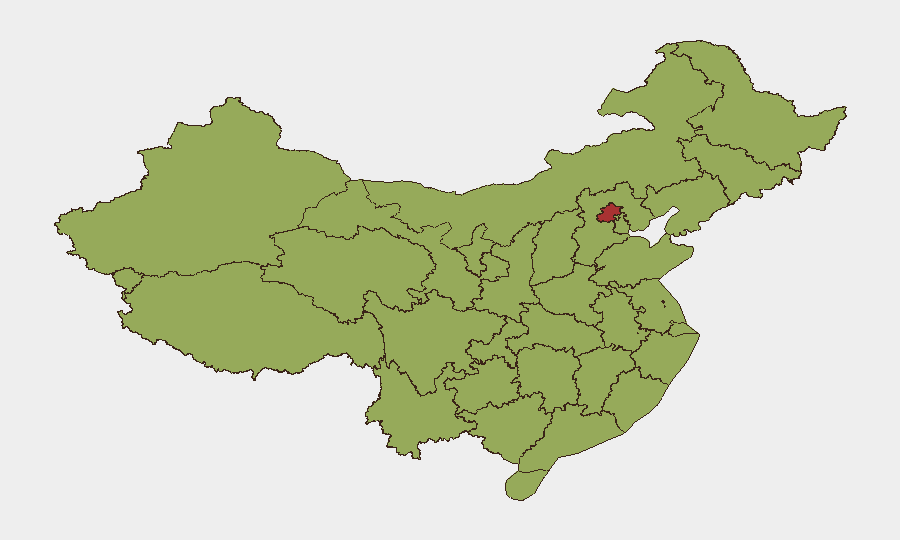
Beijing (77.8) significantly outpaces all other regions, reflecting its role as the political and administrative center where state-control mechanisms, legal proceedings, and policy announcements are concentrated. Shanghai (54.7) and the coastal industrial belt (Guangdong, Zhejiang, Fujian, Jiangsu) follow, driven by high population density, international business activity, and exposure to cross-strait tensions. Inland provinces including Heilongjiang, Jilin, and Henan rank elevated, likely reflecting border sensitivities, resource-extraction activity, and population scale. Risk in these areas remains primarily regulatory and geopolitical rather than characterized by acute criminal or civil-disorder events.
How GeoBit Would Assist
Corporate security and duty-of-care teams should deploy AOI (Area-of-Interest) Monitoring & Early Warning on offices, facilities, and travel corridors in Beijing, Shanghai, and Guangdong to receive persistent alerts on localized unrest, regulatory actions, or infrastructure disruptions. Intel Sweep and multi-language OSINT fusion across Chinese digital platforms (social media, news, regulatory announcements) enable real-time detection of policy shifts, enforcement campaigns, or emerging civil tensions ahead of mainstream reporting. Network & Actor Analysis combined with Sentiment & Temporal Analysis can identify shifts in state or corporate messaging that may signal operational tightening or elevated political risk affecting foreign business operations.
7-Day Outlook
No imminent acute crisis is forecast for the next seven days based on current open-source indicators. Regulatory campaigns (particularly the livestreaming crackdown) will likely intensify, affecting digital operations and requiring compliance reviews by affected organizations. Baseline structural risk—diplomatic tensions, military posturing, and state-control expansion—remains the dominant threat driver; monitoring should remain continuous on policy announcements and cross-strait developments rather than focused on short-term incident prediction.
Highest-Risk Areas — Ranked
| # | State / Region | Risk |
|---|---|---|
| 1 | Beijing | 77.8 |
| 2 | Shanghai | 54.7 |
| 3 | Guangdong Province | 53.7 |
| 4 | Zhejiang | 51.9 |
| 5 | Heilongjiang | 51.5 |
| 6 | Jilin | 50.8 |
| 7 | Henan | 49.7 |
| 8 | Sichuan | 49.1 |
| 9 | Fujian | 48.8 |
| 10 | Gansu | 48.5 |
| 11 | Chongqing | 48.5 |
| 12 | Jiangsu | 48.5 |
Sources
Previous Daily Briefs
A new China brief is written every day — each with its own risk map and downloadable CSV. Here's the last week; use the calendar to go further back.
📅 Browse every day by calendar →
Highlighted days have a brief. Tap a day for that day's map & analysis, or “csv” for that day's dataset ($5).
Atlas — our AI intelligence desk — emails them this snapshot personally. Nothing else, no list.