Situation Summary
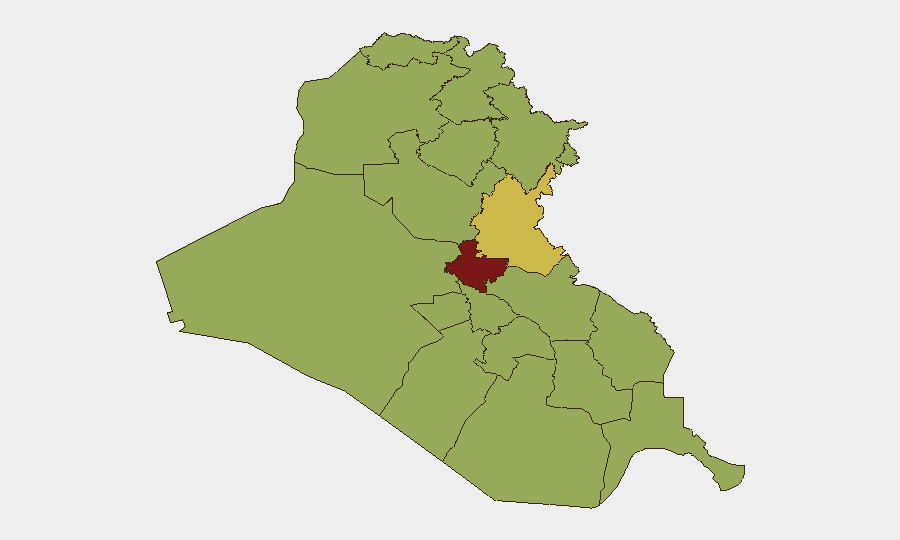
Iraq remains in elevated tension following US–Saudi precision strikes against Iran-aligned PMF targets on July 28–29, coupled with Iranian ballistic missile activity and subsequent Iraqi government condemnation of the strikes as sovereignty violations. Baghdad Governorate is the most acute flashpoint (risk score 85.6), while eastern provinces hosting PMF infrastructure and logistics nodes face sustained secondary risk. The conflict trajectory is one of tit-for-tat escalation between US–Saudi and Iranian interests using Iraqi territory as a theatre, with militia retaliation threats and economic downgrade (Moody's negative outlook, July 31) compounding security and duty-of-care exposure for corporate personnel and assets.
Key Developments
- Eastern Iraq, July 28–29: Joint US–Saudi airstrikes on Iran-aligned PMF bases. US Central Command and Saudi Armed Forces executed "precision strikes" against IRGC-directed militia targets across Baghdad, Wasit, Nineveh, Basra, Kirkuk, Karbala, and Diyala; PMF reported at least 20 killed and 32 wounded at multiple headquarters. Strikes followed over 30 drone attacks on US and Saudi targets in preceding days.
- Baghdad (national), July 29: Iraqi government formally rejects strikes as sovereignty violation. Iraqi presidency and government issued statements declaring Iraq is "not an arena to settle scores" and characterizing the US–Saudi operations as a breach of Iraqi sovereignty; military stated investigation capabilities were hindered.
- Central Baghdad, July 29: Escalated threat messaging targeting US persons and facilities. Circulating social-media and video content (July 29) reiterate warnings for US citizens to depart Iraq, citing credible militia threats against diplomatic compounds, hotels, airports, and energy sites in and around Baghdad.
- Middle East theatre, July 28 (22:45 GMT): Iranian ballistic missile launch intercepted. IRGC launched multiple ballistic missiles in attempted surprise attack on US forces; US Central Command reported all missiles successfully intercepted. No confirmed strikes in Iraq, but operation reinforces active regional conflict and Iraq's role as contested battlespace.
- Iraq (nationwide), July 31: Moody's downgrades credit outlook to negative. Rating agency cites elevated regional-conflict risk, energy-infrastructure disruption, security deterioration, and militia activity; implications for economic stability and indirect civil-unrest/political-instability risk.
Data Caveat: Open-source incident feeds and major outlets report a significant data gap for incident-level reporting on July 31–August 1. The above items are the most recently verifiable developments; no additional incident-level events with multi-source confirmation are available for the immediate 48-hour window.
Highest-Risk Areas
Baghdad Governorate's composite risk score of 85.6 reflects its concentration of diplomatic, commercial, and military infrastructure, combined with active PMF presence and demonstrated militia targeting of US-affiliated facilities. Diyala (62.6) and Kirkuk (56.4) follow, driven by PMF logistics nodes and cross-border IRGC activity; Erbil (56) adds airport and energy-sector exposure. Eastern and south-central provinces (Wasit, Basra, Karbala) face secondary risk from PMF base infrastructure and potential retaliation staging areas. Northern zones (Sulaimaniyah area) remain exposed to Iranian cross-border strikes, as demonstrated by July 24 attacks on Kurdish opposition camps.
How GeoBit Would Assist
Security teams should deploy AOI Monitoring & Early Warning on Baghdad, Erbil, and key PMF-held provinces (Wasit, Diyala) to capture militia movement and messaging escalation in near–real-time. OSINT Fusion (X/Telegram, militia statements, social video) combined with sentiment & temporal analysis will flag imminent retaliation rhetoric before kinetic activity. Alternative Routing & Network Analysis enables rapid evacuation planning for personnel in high-risk zones; Entity & Actor Network Analysis tracks PMF faction alignment and IRGC coordination to anticipate targeting patterns.
7-Day Outlook
Militia retaliation for July 28–29 strikes remains probable within 7–14 days; credible threats against US persons and critical infrastructure in Baghdad and energy nodes warrant sustained vigilance. Diplomatic messaging and potential back-channel negotiations may introduce brief de-escalation windows, but underlying Iran–Saudi–US competition ensures Iraq remains a contested theatre. Economic instability (credit downgrade, energy disruption) may trigger secondary civil-unrest risk by mid-August.
Highest-Risk Areas — Ranked
| # | State / Region | Risk |
|---|---|---|
| 1 | Baghdad Governorate | 85.6 |
| 2 | Diyala Governorate | 62.6 |
| 3 | Kirkuk Governorate | 56.4 |
| 4 | Erbil Governorate | 56 |
| 5 | Karbala | 55.8 |
| 6 | Babil Governorate | 55.6 |
| 7 | Wasit Governorate | 55.6 |
| 8 | Al-Qadisiyah Governorate | 55.6 |
| 9 | Dhi Qar Governorate | 55.6 |
| 10 | Al-Muthanna Governorate | 55.6 |
| 11 | Maysan Governorate | 55.6 |
| 12 | Al-Basra Governorate | 55.6 |
Sources
Previous Daily Briefs
A new Iraq brief is written every day — each with its own risk map and downloadable CSV. Here's the last week; use the calendar to go further back.
📅 Browse every day by calendar →
Highlighted days have a brief. Tap a day for that day's map & analysis, or “csv” for that day's dataset ($5).
Atlas — our AI intelligence desk — emails them this snapshot personally. Nothing else, no list.