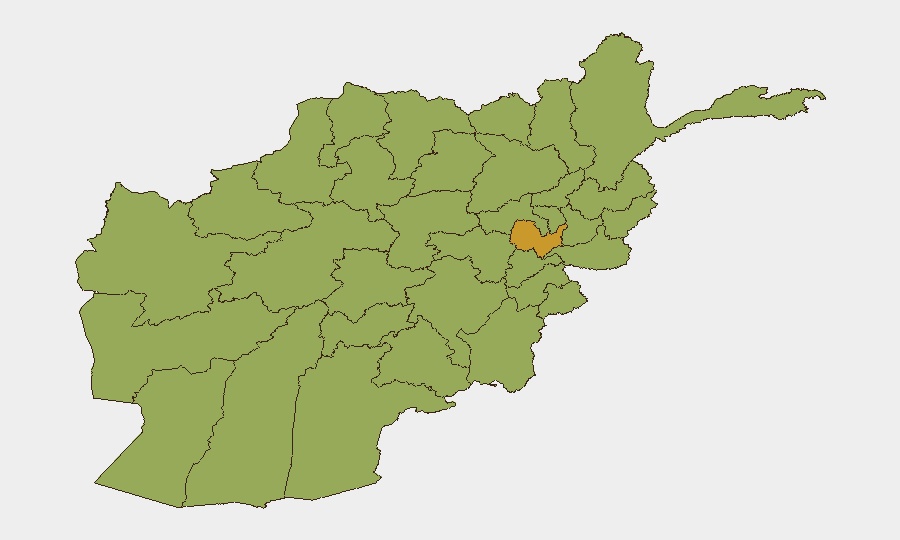
Situation Summary
Afghanistan remains a high-risk operating environment marked by active insurgency, cross-border military tensions, and internal governance friction. Kabul Province dominates the threat landscape (risk score 72), while eastern border provinces face compounded risk from Pakistani military operations and Taliban–anti-Taliban armed confrontations. The convergence of internal armed resistance, cross-border strikes, and localized civil unrest suggests a deteriorating security trajectory over the near term, with spillover effects into previously stable western regions.
Key Developments
- Pakistani airstrikes on eastern provinces (late July, exact date unconfirmed). Pakistan conducted air operations across Paktia, Paktika, and Kunar provinces targeting alleged Taliban-linked fighters; Afghan sources report 28–36 civilian deaths and 49–160 wounded. UN Assistance Mission in Afghanistan independently confirmed 13 civilian deaths in strikes on villages near the Pakistan–Afghanistan border. Pakistan's foreign ministry defended the operations as counter-terrorism.
- Cross-border clashes at Durand Line (late July). Informed sources reported fresh armed confrontations between Taliban border forces and Pakistani military units at Zakha Khel Bazaar, indicating sustained tension along the frontier and potential for escalation.
- Taliban–anti-Taliban violence in Herat (late July, date unconfirmed). Anti-Taliban militants reportedly killed three Taliban "moral police" members; separately, Taliban security forces fired on civilian protesters in Jebrail district demonstrating against detentions for hijab violations, with at least two reported killed.
- Afghanistan Freedom Front attack in Kunduz (Tuesday, no calendar date). Anti-Taliban insurgent group claimed targeting a Taliban Ranger patrol vehicle in Karte Ariana district, asserting two Taliban members killed and one injured and releasing video evidence.
- Elevated Pakistani military operations in Balochistan (four-day engagement, pre-Aug 2). Pakistan's military reported 42 security personnel and 54 militants killed over sustained operations in Balochistan linked to cross-border militant activity, indicating intensive counter-insurgency pressure with potential spillover into adjacent Afghan border zones.
Highest-Risk Areas
Kabul Province's risk score (72) reflects concentration of government, security apparatus, and opposition activity; the capital remains the primary target for both state-directed operations and insurgent/resistance activity. Eastern provinces—Paktika (44), Parwan (42.6), Zabul, Kandahar, Ghazni (all 42)—are driven by dual pressures: Pakistani military strikes targeting cross-border militant sanctuaries and Taliban control of territory sheltering anti-Pakistani armed groups. The secondary tier (Farah, Nimruz, Helmand, Jowzjan, Balkh, Badghis, all 42) reflects baseline Taliban-consolidated insurgency risk and residual anti-Taliban resistance cells. Western Herat's recent violence suggests risk elevation in regions previously assessed as lower-threat.
How GeoBit Would Assist
Corporate teams operating in or transiting Afghanistan should employ AOI Monitoring & Early Warning on Kabul, eastern border provinces, and key transit corridors to detect emerging clashes or military activity in real time. Network & Actor Analysis linked to OSINT fusion (Twitter/Telegram monitoring, entity extraction) would identify Taliban factions, anti-Taliban resistance groups (e.g., Afghanistan Freedom Front), and Pakistani military posture changes before escalation. Routing & Network Analysis enables duty-of-care teams to model safe transit alternatives away from active cross-border strike zones and inter-factional conflict areas. Risk & Threat Assessment keyed to sub-national scoring provides location-specific advisories for personnel movement and asset positioning.
7-Day Outlook
Pakistani military pressure on eastern provinces and Taliban sanctuaries is likely to continue, with elevated risk of civilian-casualty events that may trigger Afghan government retaliation or Taliban counter-strikes. Anti-Taliban insurgent activity in Kunduz and Herat suggests possible expansion of armed resistance beyond traditional strongholds. Kabul remains the highest-consequence operating risk; eastern border regions require heightened monitoring for cross-border spillover.
Highest-Risk Areas — Ranked
| # | State / Region | Risk |
|---|---|---|
| 1 | Kabul Province | 72 |
| 2 | Paktika Province | 44 |
| 3 | Parwan Province | 42.6 |
| 4 | Zabul Province | 42 |
| 5 | Kandahar Province | 42 |
| 6 | Ghazni Province | 42 |
| 7 | Farah Province | 42 |
| 8 | Nimruz Province | 42 |
| 9 | Helmand Province | 42 |
| 10 | Jowzjan Province | 42 |
| 11 | Balkh Province | 42 |
| 12 | Badghis Province | 42 |
Sources
Previous Daily Briefs
A new Afghanistan brief is written every day — each with its own risk map and downloadable CSV. Here's the last week; use the calendar to go further back.
📅 Browse every day by calendar →
Highlighted days have a brief. Tap a day for that day's map & analysis, or “csv” for that day's dataset ($5).
Atlas — our AI intelligence desk — emails them this snapshot personally. Nothing else, no list.