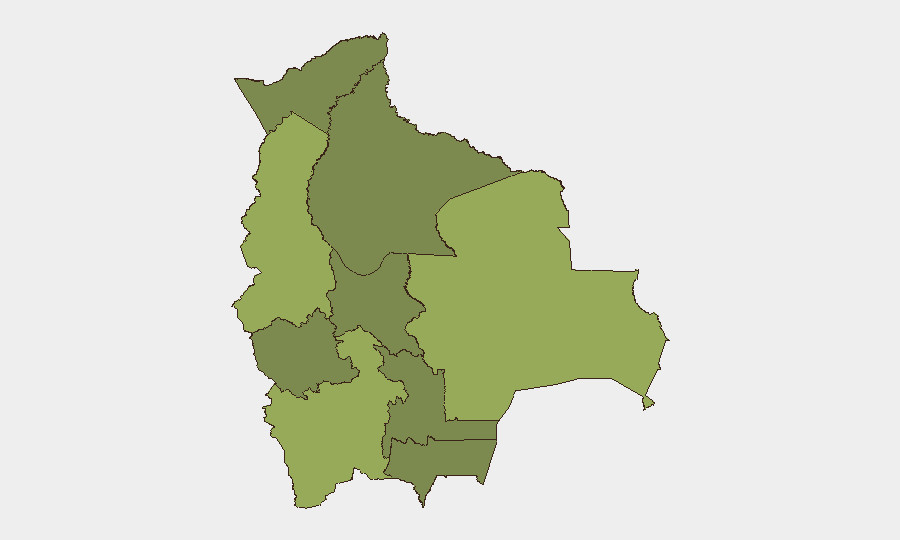
Situation Summary
Bolivia remains a mid-range global security risk (rank #50) with a composite threat score of 33 across 864 tracked events. However, the past 48 hours have seen a sharp spike in violent crime across multiple departments, particularly Santa Cruz and Cochabamba, with at least seven homicides, an armed police officer killed in a border firefight, and decapitated remains discovered in rural areas. The pattern suggests either escalating cartel violence tied to cross-border narcotics activity or a coordinated surge in organized-crime operations; political tensions (arrest/detention signals involving the presidency on 30 Jul) and judicial instability are concurrent risk factors that may compound security fragmentation.
Key Developments
- San Matías, Santa Cruz (evening 30 Jul): Armed attack killed three people and wounded one in the Brazil border municipality; police confirmed targeted attack linked to cross-border criminal groups.
- San Matías, Santa Cruz (late 30 Jul): A Bolivian police intelligence officer reinforcing border security was shot dead in a firefight; additional police deployments initiated along Brazil frontier in response to escalating violence.
- Yapacaní, Santa Cruz (morning 30 Jul): Two decapitated male bodies discovered on a rural property; police classified killings as execution-style and part of a violent-crime surge in the department.
- Santa Cruz de la Sierra (30 Jul): Multiple homicides reported within the city; combined with surrounding incidents, at least six violent deaths occurred in the department in a single 24-hour window, described by police and media as an "ola de crímenes violentos."
- Cochabamba (30–31 Jul): Several armed robberies and homicides reported; total of seven deaths confirmed across Bolivia in under 24 hours, prompting increased urban and inter-city patrols.
- Cochabamba rural area (31 Jul): Anti-narcotics police seized approximately 100 kg of drugs during a traffic stop; suspect detained as investigation into trafficking networks continues.
- Viru Viru International Airport, Santa Cruz (31 Jul): Two women previously arrested following discovery of firearms at the airport were released by judicial order; arms-trafficking investigation remains open.
- Cochabamba wildland areas (31 Jul): Two active forest fires reported; smoke and reduced visibility pose short-term risks to regional travel and infrastructure operations.
Highest-Risk Areas
La Paz (53.1) remains the highest-risk department, driven by ongoing political tension and institutional instability signals. However, Santa Cruz (42.7) has emerged as the acute security flashpoint, with seven deaths in 48 hours concentrated in border municipalities (San Matías) and rural zones (Yapacaní), alongside firearm seizures at the international airport—indicating both organized-crime violence and weapons-trafficking activity. Cochabamba (31.6) ranks fifth overall but has registered multiple homicides and large-scale drug seizures in parallel timeframes. The clustering of violence in Santa Cruz and Cochabamba, combined with cross-border crime signals in San Matías, suggests coordinated narcotics-trafficking escalation or territorial repositioning among criminal networks.
How GeoBit Would Assist
Security teams operating in Bolivia would deploy AOI Monitoring & Early Warning on San Matías, Yapacaní, and Santa Cruz de la Sierra to detect further violence spikes in real time. Network & Actor Analysis would help map criminal-group movements and cross-border connections, while Intel Sweep and multi-language OSINT (X/Twitter, Telegram, local media) would track emerging threats and cartel communications. Routing & Network Analysis would support duty-of-care teams in identifying safer inter-city travel corridors as violence patterns evolve.
7-Day Outlook
Violent-crime incidents are likely to persist in Santa Cruz and Cochabamba over the next week as criminal organizations consolidate territorial control or respond to police operations. Political pressure on the presidency and judicial instability may hamper coordinated law-enforcement response. Monitoring of border municipalities and major transport routes is essential; forest fires in Cochabamba may compound accessibility challenges.
Highest-Risk Areas — Ranked
| # | State / Region | Risk |
|---|---|---|
| 1 | La Paz | 53.1 |
| 2 | Santa Cruz | 42.7 |
| 3 | Potosí | 40.1 |
| 4 | Beni | 34.8 |
| 5 | Cochabamba | 31.6 |
| 6 | Tarija | 25.7 |
| 7 | Pando | 23.1 |
| 8 | Oruro | 23.1 |
| 9 | Chuquisaca | 23.1 |
Sources
Previous Daily Briefs
A new Bolivia brief is written every day — each with its own risk map and downloadable CSV. Here's the last week; use the calendar to go further back.
📅 Browse every day by calendar →
Highlighted days have a brief. Tap a day for that day's map & analysis, or “csv” for that day's dataset ($5).
Atlas — our AI intelligence desk — emails them this snapshot personally. Nothing else, no list.