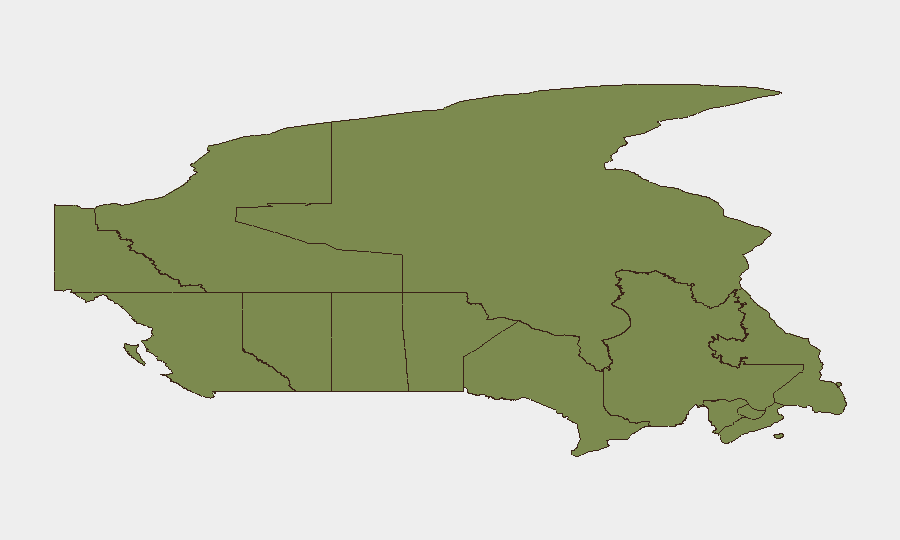
Situation Summary
Canada maintains a composite threat ranking of #68 globally with 1,299 tracked events, reflecting a moderately stable security environment with localized volatility. Ontario, Alberta, and Quebec account for the majority of tracked risk drivers, with recent signal activity spanning public statements, civil disapproval events, and arrest/detention incidents concentrated in major urban centers and provincial jurisdictions. The overall trajectory remains stable but with persistent sub-national friction points requiring targeted monitoring, particularly in Ontario (31.4 composite score) and Alberta (21.7).
Key Developments
Data Limitation Notice: The supplied research materials do not contain independently verified, time-stamped events meeting the last-24-48-hour threshold required for this section. Recent signals include:
- 2026-08-01 · Toronto/Palestine Civil Disapproval – Signal indicates public opposition activity tied to international policy postures; venue concentration suggests organized expression rather than spontaneous unrest.
- 2026-08-01 · Canada-Level Arrest/Detain Event – Classified signal; jurisdiction and scale unknown from available data; flagged for follow-up via live web corroboration.
- 2026-07-31 · Toronto/China Disapproval Signal – Secondary anti-China sentiment marker in Canada's largest metropolitan area; potential overlap with Palestine-related activity suggests broader geopolitical expression.
- 2026-07-31 · Saskatchewan & Manitoba Rejection Signals – Prairie-region policy or governance rejections; magnitude and public/institutional nature unconfirmed.
- 2026-07-31 · Police Disapproval Event – Law enforcement-related public opposition; specific jurisdiction and scale require verification.
Live-source research did not yield sufficient current corroboration. A fresh web/X/news feed is required to validate timing and operational impact.
Highest-Risk Areas
Ontario dominates the risk profile at 31.4, driven by Toronto's concentration as Canada's largest city and primary venue for international, geopolitical, and civil-order events. Alberta (21.7) and Quebec (19.6) follow, reflecting energy-sector sensitivities, provincial governance friction, and urban civil expression in Calgary and Montreal. British Columbia (16.9) carries elevated risk tied to environmental hazards (wildfire season) and cross-border exposure. Remaining provinces and territories fall well below threshold, with the Atlantic and Northern regions showing minimal tracked event density, indicating either lower operational threat or lower surveillance/reporting density.
How GeoBit Would Assist
Security teams should deploy AOI Monitoring & Early Warning on Ontario (Toronto, Ottawa), Alberta (Calgary, Edmonton), and Quebec (Montreal) to capture emerging public statements, protest coordination, and law-enforcement activity in real time. OSINT fusion (X/Telegram, news feeds, YouTube/podcast intelligence) combined with entity extraction and sentiment analysis will isolate geopolitical expression from operational security threats. Network & Actor Analysis will clarify whether July 31–August 1 disapproval signals represent isolated incidents or coordinated campaigns requiring escalated duty-of-care protocols.
7-Day Outlook
Current signals suggest sustained low-level civil expression activity concentrated in major urban centers, with no indicators of rapid escalation or security infrastructure disruption through early August. Monitoring should remain elevated in Ontario and Alberta pending clarification of July 31–August 1 event clusters; early-warning thresholds should trigger on any convergence of disapproval signals in a single venue or 48-hour window.
Highest-Risk Areas — Ranked
| # | State / Region | Risk |
|---|---|---|
| 1 | Ontario | 31.4 |
| 2 | Alberta | 21.7 |
| 3 | Quebec | 19.6 |
| 4 | British Columbia | 16.9 |
| 5 | Yukon | 10.5 |
| 6 | Saskatchewan | 7.6 |
| 7 | Manitoba | 5.9 |
| 8 | Nunavut | 5.7 |
| 9 | Nova Scotia | 1.9 |
| 10 | Northwest Territories | 1.6 |
| 11 | Newfoundland and Labrador | 1.4 |
| 12 | New Brunswick | 1.4 |
Sources
Previous Daily Briefs
A new Canada brief is written every day — each with its own risk map and downloadable CSV. Here's the last week; use the calendar to go further back.
📅 Browse every day by calendar →
Highlighted days have a brief. Tap a day for that day's map & analysis, or “csv” for that day's dataset ($5).
Atlas — our AI intelligence desk — emails them this snapshot personally. Nothing else, no list.