Situation Summary
China's composite threat score of 70 (ranked #21 globally) reflects heightened geopolitical and military tensions rather than widespread domestic unrest. Recent signal activity—concentrated on military mobilization, cross-border statements, and artillery positioning near Taiwan (27 July)—indicates elevated strategic risk. Domestic natural disasters (landslides, severe weather) and isolated incidents are present but do not yet constitute a systemic security breakdown. The security environment remains largely stable for routine corporate operations, though travel and asset exposure in high-tension zones warrant enhanced monitoring.
Key Developments
- Qingdao, Shandong Province (27 July) — China and Russia commenced joint naval exercises near Qingdao; classified as routine by Beijing but part of a broader pattern of military coordination and strategic signaling during a period of cross-strait tension.
- Pacific/Submarine Operations (27 July) — China conducted a submarine-launched missile test into the Pacific; announced as a routine capability demonstration but received international attention and reflects active military readiness posturing.
- Cross-Strait Military Activity (27 July) — Artillery and tank movements signaled near Taiwan; accompanied by public government threats and statements. This represents the highest concentration of acute military signal activity in the current dataset.
- Gansu Province, Western China (late July) — Landslide incident with 16 people reported trapped; rescue operations ongoing. Relevant for travel safety and logistics disruption in mountainous regions.
- Hubei Province, Central China (late July) — Eight deaths and ongoing severe thunderstorms reported; regional transport and supply-chain risk elevated.
- Government Investigation Activity (27 July) — GeoBit sensors detected Chinese government investigation signals, likely related to border/security matters; specifics not yet fully disclosed in open reporting.
Highest-Risk Areas
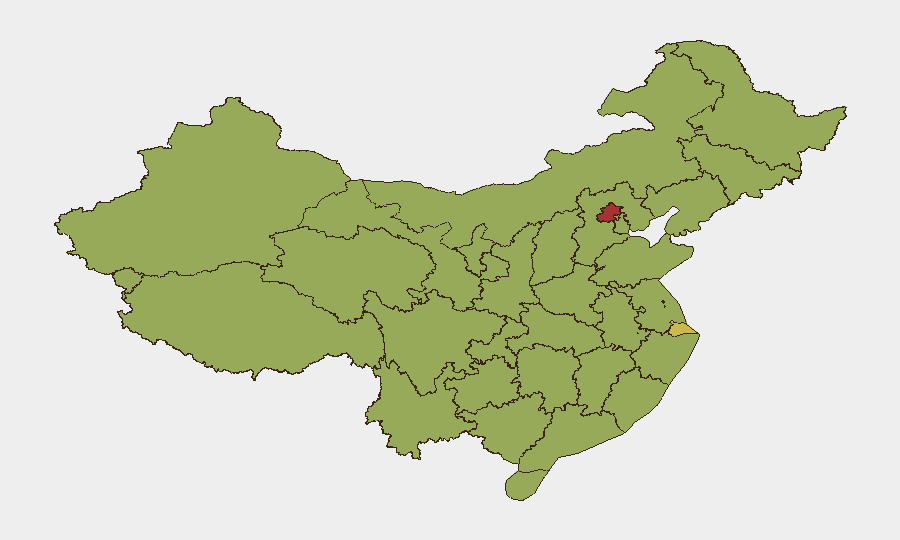
Beijing (78.9) dominates the risk ranking, reflecting both its role as the political capital and concentration of government security activity, military command, and foreign-linked networks. Shanghai (60.6), Jiangsu (56.9), and Guangdong (55.5) follow, driven by high foreign business presence, port and logistics hubs, and proximity to maritime tensions. The north-central belt—Heilongjiang, Jilin, and the coastal industrial zones—shows elevated scores linked to Sino-Russian coordination and cross-border dynamics. Risk is concentrated in economic and strategic hubs rather than distributed across rural or peripheral regions; corporate teams in Tier-1 cities should prioritize monitoring and contingency planning.
How GeoBit Would Assist
Duty-of-care teams should employ Intel Sweep and multi-language event-feed monitoring to track military signaling, government statements, and cross-border demand activity in real time. AOI Monitoring & Early Warning on Beijing, Shanghai, and Jiangsu would provide persistent watch and alert thresholds for escalation. Routing & Network Analysis supports alternative travel and supply-chain rerouting if cross-strait or regional tensions spike; Maritime & Aviation tracking monitors port and airport disruption risk from military exercises or weather events.
7-Day Outlook
Military and political signaling intensity is likely to remain elevated over the next week given ongoing cross-strait rhetoric and exercise activity. Natural disaster risk (weather, landslides) will persist in central and western regions through the monsoon season. Barring a sudden escalation event, corporate operations in major cities will remain feasible with heightened situational awareness and contingency readiness.
Highest-Risk Areas — Ranked
| # | State / Region | Risk |
|---|---|---|
| 1 | Beijing | 78.9 |
| 2 | Shanghai | 60.6 |
| 3 | Jiangsu | 56.9 |
| 4 | Guangdong Province | 55.5 |
| 5 | Zhejiang | 55 |
| 6 | Heilongjiang | 52.9 |
| 7 | Jiangxi | 51.6 |
| 8 | Jilin | 49.9 |
| 9 | Sichuan | 49.8 |
| 10 | Hubei | 49.5 |
| 11 | Gansu | 49.4 |
| 12 | Tianjin | 49.2 |
Sources
Previous Daily Briefs
A new China brief is written every day — each with its own risk map and downloadable CSV. Here's the last week; use the calendar to go further back.
📅 Browse every day by calendar →
Highlighted days have a brief. Tap a day for that day's map & analysis, or “csv” for that day's dataset ($5).
Atlas — our AI intelligence desk — emails them this snapshot personally. Nothing else, no list.