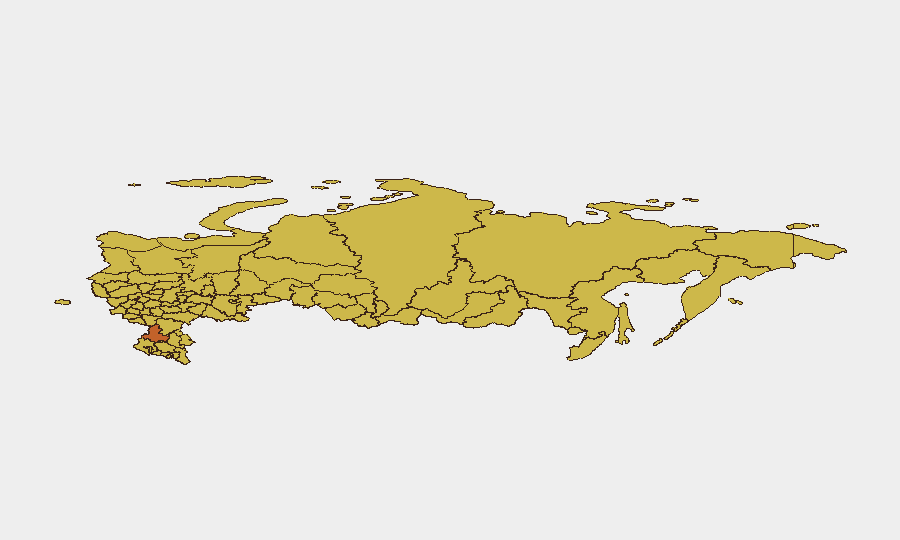
Situation Summary
Russia maintains a composite threat score of 95 (rank #9 globally), driven primarily by ongoing military operations in Ukraine and territorial disputes. Moscow remains the single highest-risk location (96.6) due to concentration of government, economic infrastructure, and repeated reports of Ukrainian strikes on military-adjacent targets in the region. The broader security landscape is characterized by active aerial and conventional military operations along the Ukraine border, fuel-sector disruptions, and escalating infrastructure targeting. Risk levels remain elevated across western and southern oblasts, with trajectory dependent on intensity and geographic scope of cross-border military activity.
Key Developments
- Moscow region / airports (2026-07-28–29): Ukrainian forces reportedly struck a Moscow oil refinery, causing fuel disruptions and flight delays at Moscow airports. Civilian air operations affected; specific casualty and damage extent not yet independently confirmed.
- Rostov Oblast (2026-07-28): Reports indicate Ukrainian drone or missile strikes on port facilities and logistics infrastructure in Rostov-on-Don, a key supply hub for Russian military operations. Extent of operational impact unclear from available sources.
- Western Russia, unspecified (2026-07-28–29): Ukrainian drone attacks reported to have caused fires and explosions in western Russian regions; Russian official sources claim air defense interceptions. Specific locations and damage scope require further corroboration.
- Russian natural gas and communications infrastructure (2026-07-26–28): Multiple sources report Ukrainian strikes on a major natural gas processing plant and two satellite communications centers within Russia. Supply chain and communications implications under assessment.
- Donetsk / territorial control (2026-07-29): Russian forces reported occupying additional territory in Donetsk region; Donetsk-aligned forces made concurrent claims. Reflects ongoing conventional military pressure in eastern Ukraine theater.
- Fuel sector degradation (2026-07-26–29): Cumulative effect of infrastructure strikes has worsened fuel shortages across Russia; refinery output constraints reported. Economic and logistics ripple effects likely to persist.
- Belgium diplomatic response (2026-07-27): Belgium issued a formal disapproval statement regarding Russian actions, consistent with ongoing Western sanctions and diplomatic isolation.
Highest-Risk Areas
Moscow (96.6) towers above all other regions due to its role as the capital, primary economic hub, and concentration of government and military command infrastructure—making it both operationally significant and a stated Ukrainian targeting priority. Rostov Oblast (75.1), Belgorod Oblast (70.2), and Kursk Oblast (68.3) rank second-tier due to proximity to the Ukraine border and role as military logistics and staging zones; these regions have absorbed cross-border drone and artillery fire and face ongoing supply-line vulnerability. Saint Petersburg (70.7) and Novgorod Oblast (70.2) carry elevated risk from historical targeting patterns and infrastructure criticality. Far-eastern regions (Primorsky Krai, Kamchatka Krai) reflect broader tension and military posture but are geographically distant from active conflict zones.
How GeoBit Would Assist
Security teams with personnel or assets in Russia should leverage Intel Sweep and X/Telegram OSINT for real-time event detection and corroboration of strikes and supply disruptions affecting operational continuity. AOI Monitoring & Early Warning on Moscow, Rostov, Belgorod, and Kursk would provide persistent alerting on military activity, infrastructure damage, and logistics chokepoints. Satellite & Imagery analysis and GIS & Spatial Analysis enable damage assessment, route re-planning, and supply-chain risk mapping around targeted facilities. Conflict & Military mapping tracks force movements and territorial control in real-time.
7-Day Outlook
Ukrainian strike tempo on Russian infrastructure (refineries, communications, logistics) is likely to continue, sustaining fuel shortages and air-travel disruptions in Moscow and western regions. Russian military operations in eastern Ukraine are expected to maintain current intensity. Risk of secondary escalation (broader strikes on civilian infrastructure, international incidents involving third parties) remains present; personnel in Moscow and border oblasts should plan for service interruptions and maintain robust contingency protocols.
Highest-Risk Areas — Ranked
| # | State / Region | Risk |
|---|---|---|
| 1 | Moscow | 96.6 |
| 2 | Rostov Oblast | 75.1 |
| 3 | Saint Petersburg | 70.7 |
| 4 | Novgorod Oblast | 70.2 |
| 5 | Belgorod Oblast | 70.2 |
| 6 | Primorsky Krai | 68.7 |
| 7 | Kamchatka Krai | 68.4 |
| 8 | Stavropol Krai | 68.4 |
| 9 | Tatarstan | 68.3 |
| 10 | Kursk Oblast | 68.3 |
| 11 | Volgograd Oblast | 68.1 |
| 12 | Astrakhan Oblast | 68 |
Sources
Previous Daily Briefs
A new Russia brief is written every day — each with its own risk map and downloadable CSV. Here's the last week; use the calendar to go further back.
📅 Browse every day by calendar →
Highlighted days have a brief. Tap a day for that day's map & analysis, or “csv” for that day's dataset ($5).
Atlas — our AI intelligence desk — emails them this snapshot personally. Nothing else, no list.