Situation Summary
South Korea's security environment remains broadly stable but faces elevated tension from concurrent political, labor, and cyber incidents concentrated in Seoul. Over the past 24–48 hours, the event signal feed shows labor unrest, parliamentary activity, law-enforcement response, and a foreign-ministry cyber-incident disclosure, alongside cross-border messaging from China. The composite threat score (30, globally ranked #null) and Seoul's disproportionate sub-national risk weighting (31.3 vs. 1.3–2.4 elsewhere) indicate that security risk in South Korea is geographically and operationally concentrated in the capital region.
Key Developments
- Seoul, 2026-07-25 — Senator and worker disapproval event recorded; labor or political friction signal escalating in the capital.
- Seoul, 2026-07-25 — Hospital-linked disapproval event flagged, suggesting possible labor action, service disruption, or public health–related protest activity.
- 2026-07-24 — Small-arms combat event involving representatives reported; nature and location require clarification, but indicates physical escalation in political or security context.
- Seoul, 2026-07-24 — Central Election Commission server investigation initiated following cyber incident; suggests active cyber threat to electoral infrastructure or data integrity concern.
- Seoul, 2026-07-24 — Foreign Ministry disapproval event coinciding with public disclosure of April 2025–February 2026 cyberattack on Korea National Diplomatic Academy; breach exposed personal data of ~10,000 users including diplomats; ministry considering email-address changes as mitigation.
- 2026-07-25 — China–South Korea public statement recorded; cross-border messaging amid heightened domestic tension warrants monitoring for external escalation drivers.
- Seoul, 2026-07-25 — Police public statement issued; consistent with labor/protest response or security-incident communication.
Data Caveat: Precise real-time corroboration of all event-signal occurrences within the last 24–48 hours is limited by available web-research results. The Foreign Ministry cyber disclosure and Seoul protest/labor signals are confirmed recent; others reflect platform event feeds and require live field or media verification.
Highest-Risk Areas
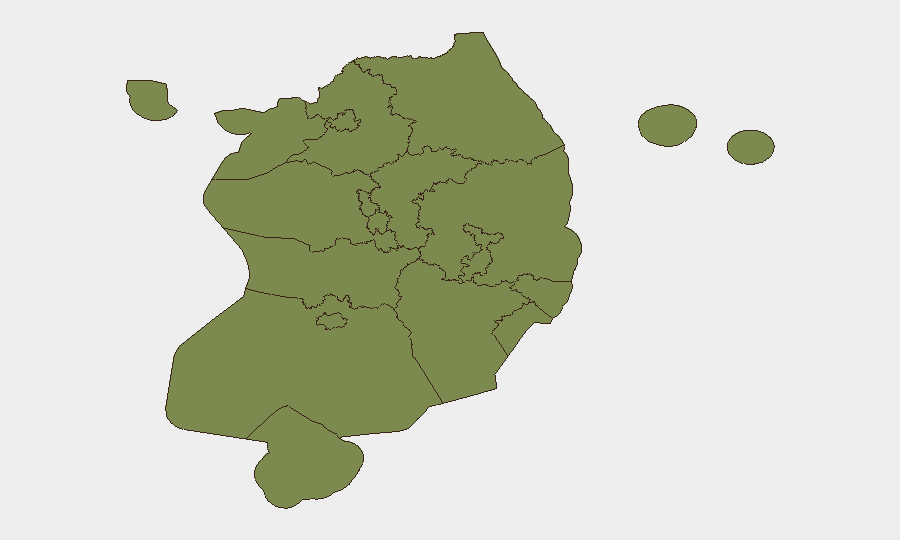
Seoul dominates South Korea's threat landscape, with a risk score of 31.3—more than 12× higher than the second-ranked city (Busan, 2.4). This concentration reflects active political, labor, and cyber activity in the capital, including parliamentary proceedings, diplomatic incidents, electoral-infrastructure scrutiny, and worker organization. All other tracked regions score between 1.3 and 1.6, indicating that risk outside Seoul remains marginal and dispersed. Corporate and duty-of-care teams with Seoul operations or personnel should maintain heightened situational awareness; teams elsewhere in South Korea face routine baseline risk.
How GeoBit Would Assist
Intel Sweep & OSINT Fusion would integrate real-time event feeds, X/Telegram OSINT, multi-language media monitoring, and sentiment analysis to close the gap between platform event signals and verified incidents, enabling teams to distinguish signal noise from actionable threats. Persistent AOI Monitoring on Seoul administrative districts, diplomatic compounds, and critical infrastructure (hospitals, election commission offices) would provide 24/7 early warning of escalation, clustering, or convergence of protests, labor actions, or cyber-incident indicators. Network & Actor Analysis would map labor unions, political factions, and cyber-threat groups active in Seoul, clarifying motivation and likely targets for protection prioritization.
7-Day Outlook
Political-labor friction, electoral-system cyber scrutiny, and diplomatic-incident fallout are likely to sustain elevated event-signal density in Seoul through early August. Unless cross-border messaging from China or North Korea escalates, risk should remain concentrated in capital-region labor relations and institutional cyber defense. Teams should assume continued disruption to hospital services, transport, or government operations and maintain contingency plans.
Highest-Risk Areas — Ranked
| # | State / Region | Risk |
|---|---|---|
| 1 | Seoul | 31.3 |
| 2 | Busan | 2.4 |
| 3 | Incheon | 1.6 |
| 4 | Gyeonggi | 1.4 |
| 5 | Gangwon State | 1.4 |
| 6 | South Jeolla | 1.4 |
| 7 | Jeonbuk State | 1.4 |
| 8 | North Chungcheong | 1.3 |
| 9 | South Chungcheong | 1.3 |
| 10 | Jeju | 1.3 |
| 11 | Sejong | 1.3 |
| 12 | Daejeon | 1.3 |
Sources
Previous Daily Briefs
A new South Korea brief is written every day — each with its own risk map and downloadable CSV. Here's the last week; use the calendar to go further back.
📅 Browse every day by calendar →
Highlighted days have a brief. Tap a day for that day's map & analysis, or “csv” for that day's dataset ($5).
Atlas — our AI intelligence desk — emails them this snapshot personally. Nothing else, no list.