Situation Summary
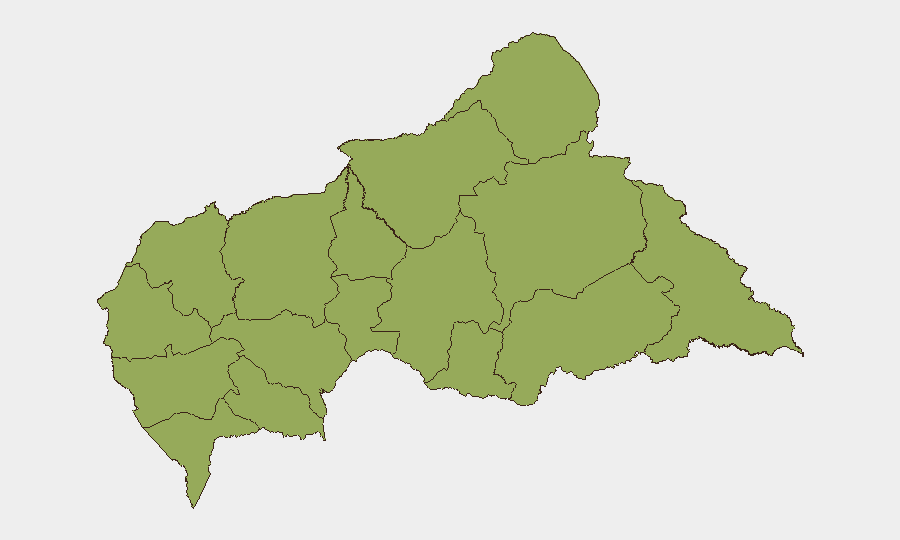
Central African Republic remains at moderate global threat rank (#28) with uniform sub-national risk across all twelve administrative regions (composite scores of 47 each), reflecting persistent fragmentation of armed groups and limited state security capacity. No discrete security incidents have been documented in the last 24–48 hours; the threat environment is shaped primarily by the structural constraints imposed by UN sanctions renewal on 29 July 2026 and residual effects of late-June fighting in Vakaga. The capital Bangui and northeastern/southeastern border zones remain the highest-concern areas for corporate operations and personnel movement. Near-term stability depends on MINUSCA presence and compliance with sanctions enforcement.
Key Developments
- UN Sanctions Renewal (Bangui, 29 July 2026): The UN Security Council unanimously adopted Resolution 2827, extending asset freezes, travel bans, and arms embargoes on CAR armed groups and designated individuals until 31 July 2027, with the expert panel mandate extended to 31 August 2027. This restricts armed group financing and cross-border arms flows, particularly affecting northeastern and southeastern border regions where non-state actors remain active.
- No Active Field Incidents (Last 48 Hours): Open-source reporting and OSINT feeds confirm no verifiable attacks, clashes, or major displacement events in the last 24–48 hours. The most recent significant incident—the Am‑Dafok fighting in Vakaga on 30 June 2026—remains outside the current reporting window but continues to influence regional security posture.
- Persistent Border-Region Vulnerability: Armed group fragmentation, sanctions evasion attempts, and porous borders with Chad, Sudan, and South Sudan create sustained risk in Vakaga, Bamingui-Bangoran, and Haute-Kotto prefectures, though no new incidents are documented this cycle.
Highest-Risk Areas
All twelve administrative regions display equal composite risk scores (47), an unusual pattern indicating either uniform data sparsity or systemic fragmentation across the country. Vakaga, Bamingui-Bangoran, Haute-Kotto, and Haut-Mbomou rank highest operationally due to proximity to ungoverned border zones and documented armed group activity (notably the Am‑Dafok incident and broader northeastern instability). Bangui, while not listed in the sub-national ranking, remains critical due to capital-city volatility, political risk, and concentration of foreign personnel. Organizations with staff in these regions should prioritize movement restrictions and real-time AOI monitoring.
How GeoBit Would Assist
Security teams should deploy AOI Monitoring & Early Warning capabilities on Vakaga, Bangui, and the tri-border zone (CAR–Chad–Sudan) to detect armed group movement, MINUSCA repositioning, or sanctions-evasion trafficking in near-real time. OSINT Fusion & Corroboration (Twitter/Telegram, local radio SIGINT, and multi-language search) would triangulate unverified social-media claims of unrest or displacement against verified sources. Routing & Network Analysis and Satellite & Imagery Analysis enable rapid alternative-route planning and situational awareness for personnel movement between Bangui and regional offices.
7-Day Outlook
No imminent large-scale security escalation is forecast for the coming week; sanctions enforcement and MINUSCA presence are expected to maintain operational status quo in Bangui and major routes. Armed group fragmentation and border permeability will persist as chronic risks requiring continuous monitoring rather than acute threat spikes. Any development affecting sanctions compliance, FACA reorganization, or Bangui political stability should be treated as potential force multipliers requiring rapid reassessment.
Highest-Risk Areas — Ranked
| # | State / Region | Risk |
|---|---|---|
| 1 | Bamingui-Bangoran | 47 |
| 2 | Vakaga | 47 |
| 3 | Haute-Kotto | 47 |
| 4 | Haut-Mbomou | 47 |
| 5 | Mbomou | 47 |
| 6 | Nana-Mambéré | 47 |
| 7 | Ouham-Pendé | 47 |
| 8 | Mambéré-Kadéï | 47 |
| 9 | Sangha-Mbaéré | 47 |
| 10 | Ouham | 47 |
| 11 | Nana-Grébizi | 47 |
| 12 | Kémo | 47 |
Sources
Previous Daily Briefs
A new Central African Republic brief is written every day — each with its own risk map and downloadable CSV. Here's the last week; use the calendar to go further back.
📅 Browse every day by calendar →
Highlighted days have a brief. Tap a day for that day's map & analysis, or “csv” for that day's dataset ($5).
Atlas — our AI intelligence desk — emails them this snapshot personally. Nothing else, no list.