Situation Summary
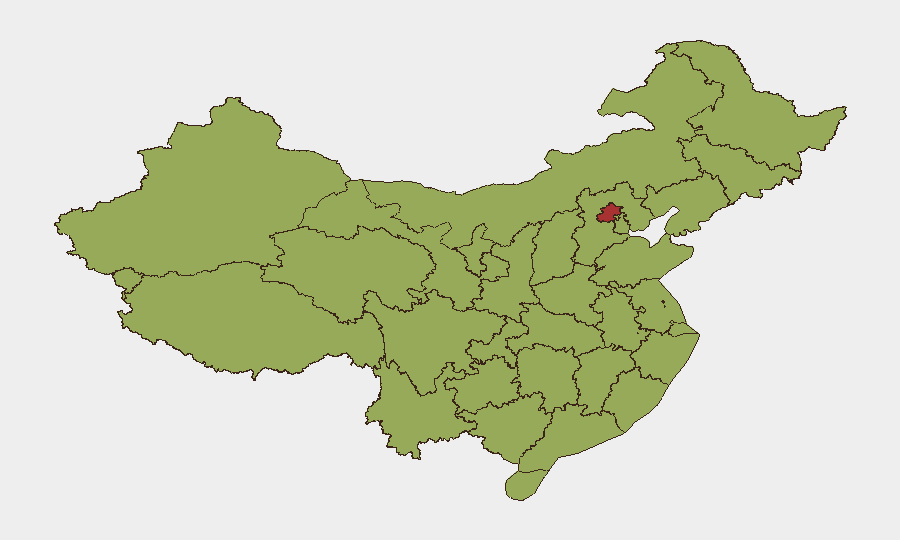
China remains at moderate overall threat (rank #18 globally, composite score 68), with no acute domestic unrest or major crime spikes in the past 24–48 hours. Baseline security conditions are stable inside mainland territory; however, recent developments underscore three concurrent pressure points: industrial safety incidents (factory fire in Fujian), extreme weather and geohazards (thunderstorms in Hubei, landslide in Gansu), and heightened military activity on China's maritime periphery (live-fire drills near Shandong, submarine missile test, coast guard confrontations with Japan and the Philippines). Beijing's composite risk score (77.3) reflects ongoing political control and administrative scrutiny rather than imminent civil instability.
Key Developments
- Jinjiang City, Fujian Province – factory fire, 28 July 2026. A shoe factory fire caused heavy casualties; President Xi ordered full search-and-rescue response. Risk: industrial safety compliance gaps, localized service disruption, and reputational/regulatory scrutiny on manufacturing oversight.
- Hubei Province – thunderstorm deaths, 28 July 2026. At least eight people killed by severe thunderstorms; forecasters warn of further torrential rain across a 200-million-person region. Risk: transport delays, infrastructure damage, elevated accident risk for mobile workers and supply chains.
- Li County, Gansu Province – landslide entrapment, 28 July 2026. Sixteen people buried; ongoing rescue operations in mountainous terrain following heavy rain. Risk: restricted mountain access, temporary road closures, and geohazard risk in western provinces.
- Qingdao, Shandong Province – China–Russia live-fire naval drills, 28 July 2026. Joint exercises in designated maritime and airspace zones near Shandong. Risk: temporary navigation and airspace restrictions; heightened military posture off China's east coast.
- Pacific Ocean – PLA submarine strategic missile test, 27–28 July 2026. China's navy successfully test-fired a strategic missile from a nuclear submarine; Japan, Australia, and New Zealand raised concerns. Risk: increased regional military tension and strategic signaling, though not a direct domestic security incident.
- Senkaku/Diaoyu Islands – China–Japan coast guard confrontation, 28 July 2026. Conflicting accounts of a confrontation involving a Japanese fishing vessel; China Coast Guard issued warning and expulsion. Risk: maritime friction; potential for escalation in contested waters.
- South China Sea (Second Thomas Shoal) – PRC–Philippine clash, July 2026. China Coast Guard used water cannon; a Philippine service member was injured. Risk: escalating South China Sea confrontation; indirect implications for regional maritime security and travel in contested areas.
Highest-Risk Areas
Beijing dominates the sub-national ranking (77.3), driven by administrative/political control mechanisms rather than acute unrest. Shanghai (56.1), Guangdong (55.4), and Jiangsu (55.0) reflect coastal exposure, financial sector sensitivity, and trade-dependent economies vulnerable to disruption. Recent natural disasters have elevated risk scores in Hubei (49.2) and Gansu (47.6); both regions face ongoing weather and geohazard threats. Western and central provinces (Sichuan, Guangxi, Henan) maintain moderate baseline risk linked to infrastructure fragility and geographic isolation.
How GeoBit Would Assist
Security teams should deploy AOI Monitoring & Early Warning on Hubei and Gansu to track weather, landslide, and flood progression in real time. Conflict & Military tracking combined with Maritime & Aviation monitoring enable continuous surveillance of PLA drills, coast guard activity, and regional military posture near Shandong and disputed waters. Environmental & Health intelligence, paired with Intel Sweep and multi-language OSINT, provide rapid alerting on industrial incidents, supply-chain disruption, and localized unrest before mainstream reporting.
7-Day Outlook
Extreme weather will remain the dominant near-term risk; torrential rain forecasts across central and eastern China warrant heightened vigilance on transport, logistics, and personnel safety through early August. Military drills and coast guard operations are likely to persist along maritime boundaries, sustaining elevated regional tension but not directly affecting mainland operations. Domestic unrest risk remains low, though industrial safety and disaster-response narratives may prompt tighter regulatory enforcement on factories and construction sites.
Highest-Risk Areas — Ranked
| # | State / Region | Risk |
|---|---|---|
| 1 | Beijing | 77.3 |
| 2 | Shanghai | 56.1 |
| 3 | Guangdong Province | 55.4 |
| 4 | Jiangsu | 55 |
| 5 | Zhejiang | 50.1 |
| 6 | Jiangxi | 49.8 |
| 7 | Hubei | 49.2 |
| 8 | Tibet | 48 |
| 9 | Sichuan | 47.8 |
| 10 | Guangxi | 47.7 |
| 11 | Henan | 47.7 |
| 12 | Gansu | 47.6 |
Sources
Previous Daily Briefs
A new China brief is written every day — each with its own risk map and downloadable CSV. Here's the last week; use the calendar to go further back.
📅 Browse every day by calendar →
Highlighted days have a brief. Tap a day for that day's map & analysis, or “csv” for that day's dataset ($5).
Atlas — our AI intelligence desk — emails them this snapshot personally. Nothing else, no list.