Situation Summary
Russia faces sustained Ukrainian long-range strike operations targeting critical energy, logistics, and communications infrastructure across multiple regions, including strikes deep within Russian territory (Kirov, Moscow region, Saint Petersburg area). Concurrent active ground combat in occupied Ukraine continues with reported territorial gains by Russian forces. The cumulative effect of energy-infrastructure degradation has triggered emerging civil-logistics stress, including documented fuel shortages and suspended municipal services in some localities. Security risk remains elevated across Moscow and southern/western border regions, with geopolitical tension reflected in recent diplomatic friction with the U.S. and Iran.
Key Developments
- Kirov, Russia (overnight, 29–30 July): Ukrainian strike killed 6 and injured 26; warehouses belonging to Wildberries (Russia's largest online retailer) targeted, disrupting commercial logistics.
- Moscow region (28–29 July): Oil refinery struck for the second time in one week; drone threat forced temporary disruption of commercial flights at Moscow airports.
- Natural gas and satellite communications (29 July, "last night"): Ukrainian forces struck a major gas processing plant and two satellite communications centers inside Russia, indicating attacks on strategic energy and military/civil command infrastructure.
- Sea of Azov and Russian oil facilities (29 July): Multiple oil facility strikes; two oil tankers set ablaze in the Sea of Azov, affecting maritime and energy-infrastructure security.
- Saint Petersburg and Samara regions (latest update, within 48h): Ukraine's General Staff reported fresh strikes on oil refineries and defense-related industrial facilities; cumulative campaign has degraded approximately 43% of Russia's refining capacity.
- Nationwide fuel logistics (recent, 28–29 July): RFE/RL reports that drone campaign against refineries has triggered fuel shortages; garbage collection suspended in some Russian localities due to lack of fuel for municipal vehicles.
- Occupied Kharkov and Donetsk regions (24-hour Russian MoD report, 29 July): Russian forces reported taking Shiykovka, Novy Mir, Cherneshchina, Druzhelyubovka (Kharkov region) and Vasilevka (Donetsk); 282 Ukrainian drones reported shot down over the same period.
- Cross-border energy infrastructure (29 July, Russian MoD): Geran UAVs struck a 110 kV substation (Sumy region, Ukraine) and gas distribution station (Chernigov region, Ukraine), with fires at petrol stations near Gorodnya and Novgorod-Severskiy, affecting supply lines to Russian operations.
Highest-Risk Areas
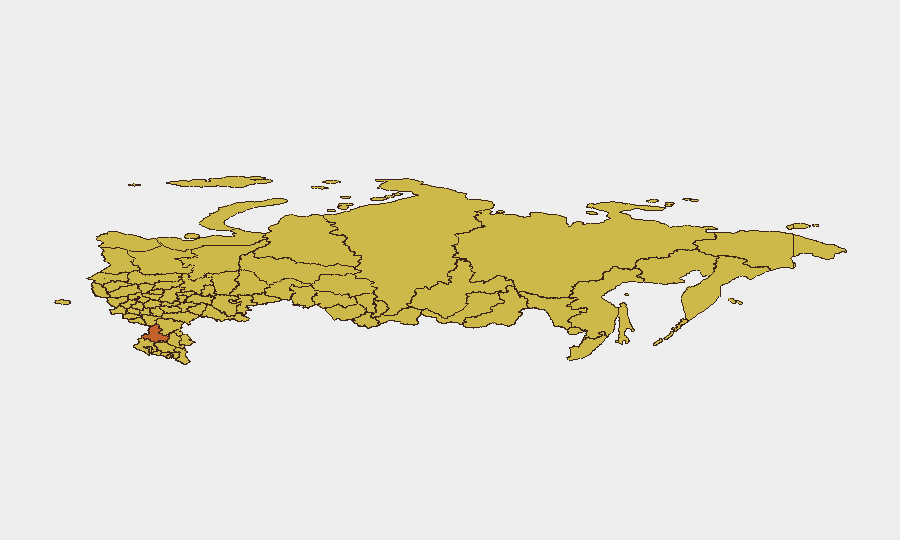
Moscow dominates the risk ranking (96.5) due to ongoing drone threats to aviation and energy infrastructure, combined with its role as the political and economic center. Rostov Oblast (73.8), Belgorod Oblast (69.8), and other southern/western border regions face elevated risk from proximity to active combat zones and cross-border strike capabilities. Saint Petersburg (70.7) has emerged as a significant vulnerability owing to recent strikes on refining capacity and industrial infrastructure. The concentration of critical energy, logistics, and communications assets in these urban centers, coupled with demonstrated Ukrainian long-range precision capability, sustains high composite threat scores.
How GeoBit Would Assist
Corporate security teams should deploy AOI Monitoring & Early Warning on energy facilities, logistics hubs, and transportation corridors in Moscow, Saint Petersburg, and Rostov Oblast to detect strike patterns and provide advance notice of supply disruptions. Conflict & Military battle mapping and Satellite & Imagery Analysis enable real-time assessment of infrastructure damage and operational tempo near occupied territories. Economic & Trade and Routing & Network Analysis capabilities help identify alternative supply chains and travel routes as fuel shortages and air-defense activity persist.
7-Day Outlook
Ukrainian long-range strikes on energy and logistics infrastructure will likely continue, sustaining pressure on Russian fuel production and civilian supply chains. Fuel shortages and associated service disruptions are expected to intensify in the near term, increasing operational friction for commercial entities. Active ground combat in occupied Ukraine will persist with potential for localized territorial shifts; aviation and ground transportation remain elevated-risk activities in and around Moscow and western border regions.
Highest-Risk Areas — Ranked
| # | State / Region | Risk |
|---|---|---|
| 1 | Moscow | 96.5 |
| 2 | Rostov Oblast | 73.8 |
| 3 | Saint Petersburg | 70.7 |
| 4 | Novgorod Oblast | 70.4 |
| 5 | Belgorod Oblast | 69.8 |
| 6 | Dagestan | 69.5 |
| 7 | Primorsky Krai | 69 |
| 8 | Kamchatka Krai | 68.5 |
| 9 | Stavropol Krai | 68.5 |
| 10 | Tatarstan | 68.4 |
| 11 | Murmansk Oblast | 68 |
| 12 | Astrakhan Oblast | 68 |
Sources
Previous Daily Briefs
A new Russia brief is written every day — each with its own risk map and downloadable CSV. Here's the last week; use the calendar to go further back.
📅 Browse every day by calendar →
Highlighted days have a brief. Tap a day for that day's map & analysis, or “csv” for that day's dataset ($5).
Atlas — our AI intelligence desk — emails them this snapshot personally. Nothing else, no list.