Situation Summary
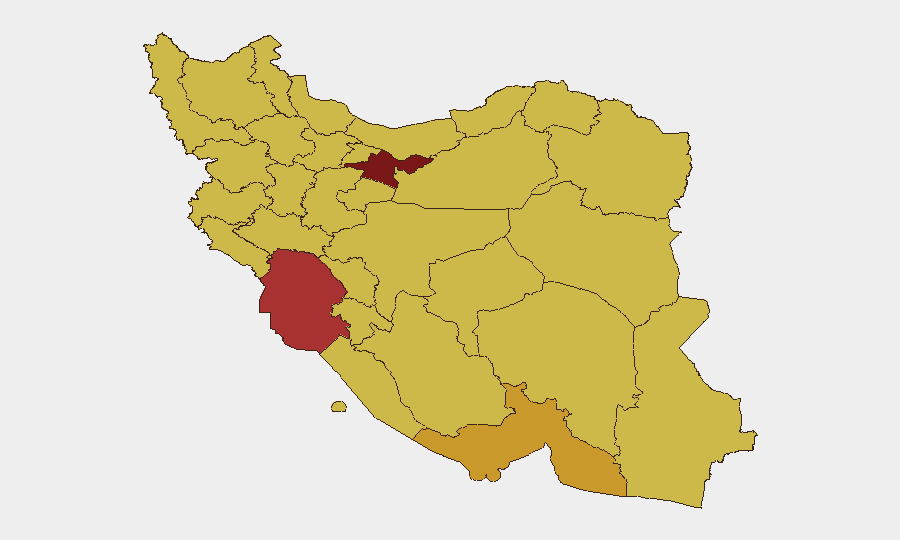
Iran remains at elevated threat level (#9 globally, composite score 96) amid persistent U.S.–Iran military escalation and domestic instability. Multiple signals over July 23–25 indicate armed clashes, civilian unrest, and high-level policy discord within Iran's government and military structures. Tehran Province dominates the risk landscape, but southwestern provinces (Khuzestan, Hormozgan) and border regions face sustained vulnerability to both external military pressure and internal security operations.
Key Developments
Note: Available open sources do not contain reliably time-stamped, location-specific incidents confirmed to have occurred *inside Iran* within the last 24–48 hours. The event signals listed below (July 23–25) are tracked by GeoBit but lack granular geographic or incident-level detail in public reporting. The following represent the strongest signals available, with the caveat that verification and precise timing remain incomplete:
- Iran/Kuwait border region, July 23, 2026 – Aerial weapons deployment reported; direction and extent unclear from open sources.
- Tehran (national level), July 25, 2026 – Cabinet-level investigation announced; domestic policy or security review implied, specifics not yet public.
- Nationwide, July 23–25, 2026 – Multiple "disapprove" signals involving Iran vs. civilian actors and military vs. Iran suggest internal friction over civilian protest response or military conduct; no discrete incident yet confirmed in open media.
- U.S.–Iran posture, July 24–25, 2026 – Threat statements exchanged between U.S. President and Iranian leadership; military escalation rhetoric sustained but no new kinetic event confirmed inside Iran territory in last 48h.
Background context (pre–July 24): U.S. forces reported eliminating an Iranian drone attack in northern Iraq on July 24, with one U.S. service member killed. Iranian state media reported infrastructure strikes in Khuzestan on the night of July 23–24. Both incidents occurred outside the 48-hour window but inform current threat environment.
Highest-Risk Areas
Tehran Province (96.9) drives national threat score; the capital's density of government, military, and diplomatic targets, combined with police presence and protest activity, sustains the highest composite risk. Khuzestan (78.6) and Hormozgan (72) follow, both energy-rich and strategically exposed to Gulf military activity and cross-border pressure. Isfahan, Fars, and Bushehr provinces round the top tier, reflecting concentration of oil, gas, nuclear, and military infrastructure vulnerable to external strike and domestic unrest. Border provinces (Sistan and Baluchestan, Kurdistan) face additional risk from cross-border militant activity and ethnic/sectarian friction.
How GeoBit Would Assist
Security teams managing personnel or assets in Iran should deploy AOI Monitoring & Early Warning on high-risk provinces (Tehran, Khuzestan, Hormozgan) to detect protests, strikes, infrastructure disruptions, and military operations in real time. Intel Sweep with X/Twitter & Telegram OSINT and multi-language search provides 24-hour coverage of Iranian official statements, eyewitness reports, and regime-aligned media for early detection of policy shifts, arrests, or unannounced security operations. Conflict & Military battle mapping and force-structure tracking enable monitoring of IRGC and Artesh deployments and posture changes that signal escalation or crackdown risk.
7-Day Outlook
Cabinet investigation and military-civilian friction signals suggest internal debate over response doctrine; outcome likely to clarify within 48–72 hours and may shift security operations or protest suppression tactics. U.S.–Iran threat rhetoric will likely persist; kinetic risk remains elevated but episodic rather than continuous. Duty-of-care teams should expect maintained volatility in Tehran and southwestern provinces, with telecom/power disruptions possible as collateral or deliberate suppression measures.
Highest-Risk Areas — Ranked
| # | State / Region | Risk |
|---|---|---|
| 1 | Tehran Province | 96.9 |
| 2 | Khuzestan Province | 78.6 |
| 3 | Hormozgan Province | 72 |
| 4 | Isfahan Province | 69.3 |
| 5 | Fars Province | 69.1 |
| 6 | Bushehr Province | 69 |
| 7 | Sistan and Baluchestan Province | 68.6 |
| 8 | Kurdistan Province | 68.6 |
| 9 | Zanjan Province | 68 |
| 10 | Yazd Province | 67.6 |
| 11 | Kerman Province | 67.6 |
| 12 | East Azerbaijan Province | 67.4 |
Sources
Previous Daily Briefs
A new Iran brief is written every day — each with its own risk map and downloadable CSV. Here's the last week; use the calendar to go further back.
📅 Browse every day by calendar →
Highlighted days have a brief. Tap a day for that day's map & analysis, or “csv” for that day's dataset ($5).
Atlas — our AI intelligence desk — emails them this snapshot personally. Nothing else, no list.