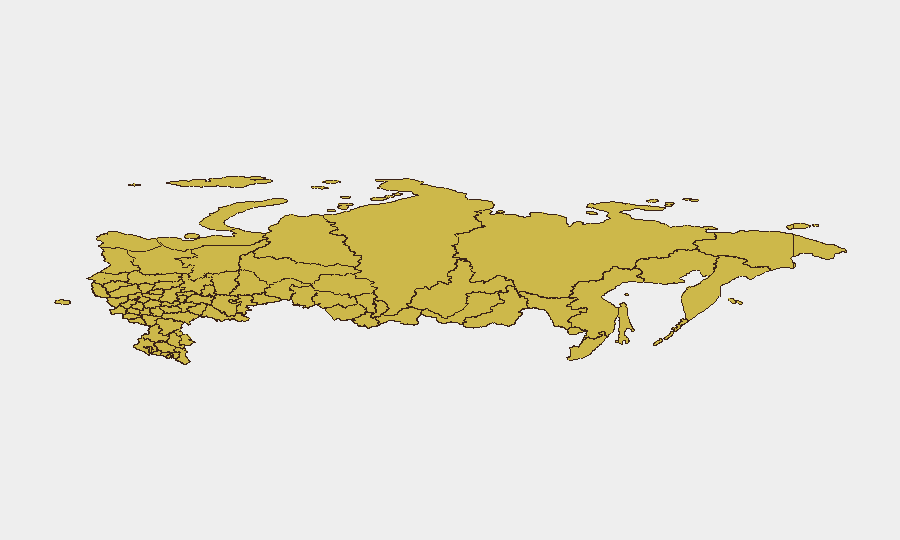
Situation Summary
Russia remains at composite threat level #9 globally, driven primarily by active interstate conflict and 1,068 tracked security events. Recent 24–48-hour signals indicate escalating infrastructure targeting and diplomatic friction, with Ukrainian drone and sabotage strikes against Russian oil terminals, refineries, and communications nodes complemented by U.S.–Russia public disapproval statements. Moscow itself registers the highest sub-national risk (96.8), while southern border regions and conflict-adjacent zones show elevated but secondary risk concentration.
Key Developments
- 2026-07-31 · Infrastructure targeting (Moscow refinery & regional oil terminals): Ukrainian drone/sabotage operations continue against Russian petroleum and transport infrastructure, including Moscow-area refinery strikes and Tuapse oil terminal disruptions; air-traffic restrictions at Moscow airports and vessel restrictions at Novorossiysk port remain in effect.
- 2026-07-31 · U.S.–Russia diplomatic tension: Public disapproval statements exchanged between U.S. and Russian officials; concurrent U.S.–Kyiv unconventional warfare coordination signals detected.
- 2026-07-29 · Territorial consolidation (Donetsk sector): Russian and Donetsk-aligned forces reported occupying additional territory; linked to broader conventional military operations ongoing since February 2022.
- 2026-07-28 · Aerial weapons deployment: Russian aerial weapons employment against Ukrainian targets; civilian population exposure noted in strike zones.
- 2026-07-29 · Regional diplomatic friction (Tehran): Iran–Russia relations signaled reduction; geopolitical implications for sanctions evasion and supply networks under review.
Data limitation: Open-source intelligence for the exact 24–48-hour window (as of 2026-07-31 02:07 UTC) remains incomplete. Incident synthesis relies on available Reuters live updates and infrastructure-targeting trend data. A full incident roster would benefit from direct social-media (X/Twitter, Telegram) intelligence feed integration.
Highest-Risk Areas
Moscow (96.8) dominates the risk profile due to concentration of government, financial, and critical infrastructure assets combined with ongoing drone-strike patterns and air-defense operations. Southern border regions—Rostov (70.4), Belgorod (68.8), and Kalmykia (68.5)—face sustained military activity, cross-border drone operations, and logistics disruption tied to the Ukraine conflict. Saint Petersburg (68.2) and Tatarstan (67.9) register secondary but significant risk from cyber-targeting of energy and communications infrastructure and residual terrorism susceptibility. Risk in all listed regions is driven by interstate military operations (primary), infrastructure vulnerability to sabotage, and downstream civilian exposure.
How GeoBit Would Assist
Intel Sweep & OSINT Fusion: Correlate X/Twitter, Telegram, and YouTube intelligence with satellite and aerial-imagery analysis to build real-time incident rosters and validate infrastructure-strike reports within 2–4 hours of occurrence.
AOI Monitoring & Early Warning: Establish persistent area-of-interest watches on Moscow and southern border regions (Rostov, Belgorod) with automated alerting on drone activity, military movement, and communications disruption—enabling advance duty-of-care notifications.
Risk & Threat Assessment + Network Analysis: Profile supply-chain and logistics vulnerabilities in oil, power, and transport sectors; map alternative routing and safe transit corridors for personnel and cargo moving through or around high-risk zones.
7-Day Outlook
Infrastructure targeting is likely to persist, with emphasis on energy and communications nodes in western and southern Russia. Diplomatic friction may escalate rhetorical posturing but is unlikely to shift kinetic operations in the near term. Moscow and southern border regions will remain elevated-risk environments; personnel travel and asset exposure should assume continued air-defense activity and potential secondary effects on civilian infrastructure.
Highest-Risk Areas — Ranked
| # | State / Region | Risk |
|---|---|---|
| 1 | Moscow | 96.8 |
| 2 | Rostov Oblast | 70.4 |
| 3 | Dagestan | 70.3 |
| 4 | Primorsky Krai | 68.9 |
| 5 | Belgorod Oblast | 68.8 |
| 6 | Republic of Kalmykia | 68.5 |
| 7 | Krasnodar Krai | 68.4 |
| 8 | Saint Petersburg | 68.2 |
| 9 | Stavropol Krai | 68 |
| 10 | Tatarstan | 67.9 |
| 11 | Orenburg Oblast | 67.9 |
| 12 | Ryazan Oblast | 67.9 |
Sources
Previous Daily Briefs
A new Russia brief is written every day — each with its own risk map and downloadable CSV. Here's the last week; use the calendar to go further back.
📅 Browse every day by calendar →
Highlighted days have a brief. Tap a day for that day's map & analysis, or “csv” for that day's dataset ($5).
Atlas — our AI intelligence desk — emails them this snapshot personally. Nothing else, no list.