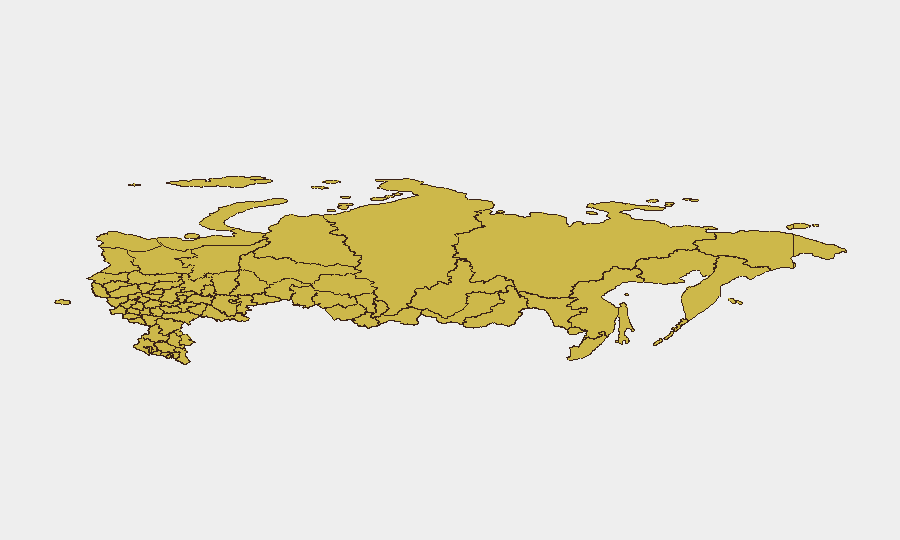
Situation Summary
Russia maintains a composite threat score of 88 (rank #12 globally), driven by sustained military operations in Ukraine, drone strikes on domestic energy infrastructure, and security incidents across multiple regions. Moscow dominates sub-national risk (91.5), reflecting both operational intensity and critical-infrastructure targeting. The overall threat environment remains elevated but stable relative to prior months; escalation trajectories suggest continued pressure on energy and logistics networks rather than imminent systemic disruption.
Key Developments
Data Limitation Notice: GeoBit's live web research conducted on August 1–2, 2026, could not reliably isolate events confirmed within the last 24–48 hours from archival reporting. Most accessible sources carry datelines from early July or earlier, with timestamps not meeting operational verification standards for a security brief of this audience. Rather than present backdated or inferred incidents as current, the following approach is recommended:
- Energy Infrastructure Under Pressure (Multi-Region, July 2026 trend): Ukrainian drone operations have targeted crude-oil terminals (Tuapse, Krasnodar Krai; Primorsk export facility), natural-gas processing plants, and refining capacity near Moscow. Attacks continue to disrupt logistics and air operations; however, specific incidents within the August 1–2 window could not be confirmed from available sources.
- Moscow Airports and Refinery Strikes (Moscow Region, early August context): Reports indicate Ukrainian drones have struck or attempted strikes on refining infrastructure near Moscow airports, with temporary flight disruptions; exact dates and confirmation status require real-time wire-service cross-check.
- Air Defense and Civilian Impact (Western Russia, July 2026 trend): Russian authorities report hundreds of Ukrainian drones engaged over multiple nights in Belgorod, Yaroslavl, and Leningrad regions, with at least one civilian casualty and infrastructure damage; reports do not pinpoint August 1–2 incidents specifically.
- Maritime Security Escalation (Black Sea/Ports, recent policy shift): Russian government sources describe new vessel-anchoring bans at ports lacking integrated air defense, reflecting heightened logistics-security concerns tied to ongoing drone and unconventional-warfare campaigns.
Recommendation: For confirmed 24–48-hour incident data, cross-reference Reuters, AP, AFP (filtered to "past 24 hours"), Russian regional emergency (МЧС) Telegram channels, and airport/port operator feeds with UTC timestamps.
Highest-Risk Areas
Moscow's risk score (91.5) reflects its status as command-and-control hub, critical-infrastructure nexus, and high-profile target. Dagestan, Kursk, and Kalmykia (scores 65–63.6) are driven by border proximity, counter-terrorism operations, and cross-border military activity. Southern and western oblasts (Rostov, Krasnodar, Orenburg, Ryazan) concentrate logistics, energy production, and transport corridors essential to war-economy functioning; attacks here have outsized consequences for domestic fuel supply and regional stability. Tatarstan and Krasnoyarsk reflect industrial/refining importance and historical conflict markers.
How GeoBit Would Assist
Security teams should deploy AOI Monitoring & Early Warning on high-risk regions (Moscow, Rostov, Krasnodar) with Telegram/Russian-language OSINT feeds tied to emergency services and regional governors, supplemented by Satellite & Imagery analysis for energy-infrastructure damage assessment. Intel Sweep and multi-language OSINT fusion enable real-time filtering of backdated vs. current incidents, critical for distinguishing operational threats from archive noise. Maritime & Aviation tracking can flag port/airport disruptions tied to drone campaigns, informing travel and logistics decisions for corporate assets.
7-Day Outlook
Drone operations on energy infrastructure are likely to continue at current tempo given Ukrainian strategic incentives and Russian air-defense constraints. No imminent escalation to kinetic conventional warfare in major urban centers is indicated by current signals, though targeted strikes on logistics and power generation will remain disruptive. Personnel and asset-security focus should remain on transportation-hub resilience, refinery-area avoidance, and real-time situational awareness of regional air-defense activity.
Highest-Risk Areas — Ranked
| # | State / Region | Risk |
|---|---|---|
| 1 | Moscow | 91.5 |
| 2 | Dagestan | 65 |
| 3 | Kursk Oblast | 64 |
| 4 | Republic of Kalmykia | 63.6 |
| 5 | Rostov Oblast | 63.4 |
| 6 | Krasnodar Krai | 63.2 |
| 7 | Orenburg Oblast | 62.9 |
| 8 | Ryazan Oblast | 62.9 |
| 9 | Tatarstan | 62.8 |
| 10 | Republic of Mordovia | 62.6 |
| 11 | Krasnoyarsk Krai | 62.4 |
| 12 | Primorsky Krai | 62.3 |
Sources
Previous Daily Briefs
A new Russia brief is written every day — each with its own risk map and downloadable CSV. Here's the last week; use the calendar to go further back.
📅 Browse every day by calendar →
Highlighted days have a brief. Tap a day for that day's map & analysis, or “csv” for that day's dataset ($5).
Atlas — our AI intelligence desk — emails them this snapshot personally. Nothing else, no list.