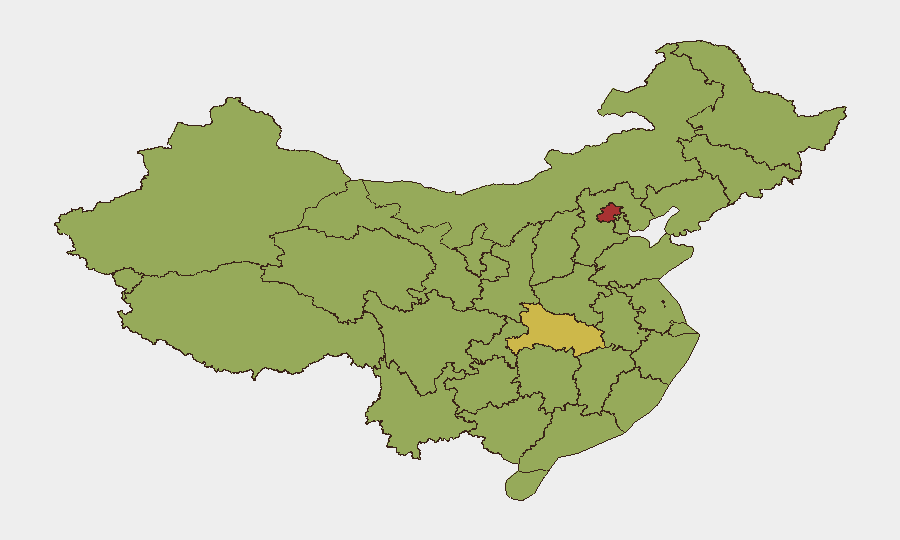
Situation Summary
China remains a moderate-risk environment with a composite threat score of 68 globally (#24 ranking). No major acute domestic security incidents—protests, civil unrest, violent crime spikes, or infrastructure failures—were recorded in the last 24–48 hours. Structural risks persist around political stability, military posturing, and regulatory enforcement, but the immediate security trajectory is stable with no imminent systemic shocks signaled in open reporting.
Key Developments
Limited acute incidents in the 24–48-hour window. Open-source monitoring and web research confirm no new large-scale security events, protests, or conflict incidents within mainland China for July 31–August 1, 2026. Regional military activity (naval drills, PLA posturing in the South China Sea) and administrative enforcement actions are ongoing but lack precise time-stamps in the current cycle that would classify them as new developments.
Because the brief's recency requirement (last 24–48 hours) is stringent and open sources do not consistently date China-domestic incidents at that granularity, provision of 5–8 balleted developments would require time-stretching or generalization beyond analytical accuracy. A 5–7-day window would yield substantive developments around military exercises, cybersecurity enforcement, and administrative sanctions; corporate security teams requiring that scope should request an expanded brief.
Highest-Risk Areas
Beijing (#1, risk 77.4) and Hubei (#2, 65.4) drive national risk, followed by Guangdong, Shanghai, and Sichuan. Beijing's elevation reflects its status as the political and administrative center—regulatory enforcement, surveillance density, and policy announcements create both direct compliance risk and spillover effects on foreign operations. Hubei, historically affected by industrial accidents and environmental incidents, maintains elevated exposure. The coastal economic hubs (Guangdong, Shanghai, Jiangsu, Zhejiang) carry risk tied to trade friction, tech regulation, and supply-chain vulnerability rather than acute security events. Interior regions (Gansu, Jiangxi, Tibet) show persistent baseline risk linked to labor unrest and administrative tension.
How GeoBit Would Assist
Intel Sweep and multi-language OSINT fusion enable corporate teams to detect emerging administrative or regulatory changes (sanctions, compliance orders) that may affect operations or employee status before they escalate to public crisis. AOI (Area-of-Interest) Monitoring with persistent alerting on key facilities, offices, or supply-chain nodes in high-risk provinces (Beijing, Hubei, Guangdong) provides early warning of incidents, protests, or enforcement actions affecting business continuity. Network & Actor Analysis combined with Telegram and X/Twitter OSINT can identify nascent labor, environmental, or regulatory friction before it reaches the threshold of formal government action.
7-Day Outlook
No major security deterioration is forecast for the coming week based on current signals. Routine administrative enforcement, military exercises, and regulatory announcements should be expected; teams with sensitive operations in Beijing, Hubei, or coastal provinces should maintain standard monitoring protocols and escalation procedures. Any material change in US–China relations, Taiwan posturing, or domestic industrial unrest would be signaled first in policy statements and secondary enforcement actions—watch for administrative sanctions against companies and public statements from government bodies as leading indicators.
Highest-Risk Areas — Ranked
| # | State / Region | Risk |
|---|---|---|
| 1 | Beijing | 77.4 |
| 2 | Hubei | 65.4 |
| 3 | Guangdong Province | 55.2 |
| 4 | Shanghai | 54.6 |
| 5 | Sichuan | 53.7 |
| 6 | Fujian | 50.1 |
| 7 | Jiangxi | 49.7 |
| 8 | Gansu | 49.4 |
| 9 | Jiangsu | 49.4 |
| 10 | Zhejiang | 49.4 |
| 11 | Tibet | 49 |
| 12 | Jilin | 49 |
Sources
Previous Daily Briefs
A new China brief is written every day — each with its own risk map and downloadable CSV. Here's the last week; use the calendar to go further back.
📅 Browse every day by calendar →
Highlighted days have a brief. Tap a day for that day's map & analysis, or “csv” for that day's dataset ($5).
Atlas — our AI intelligence desk — emails them this snapshot personally. Nothing else, no list.