Situation Summary
Russia faces sustained elevated security risk driven by an intensive Ukrainian drone campaign targeting critical infrastructure across multiple regions. The overnight Aug 1–2 attacks represent a significant escalation in geographic scope and operational complexity, with strikes confirmed on energy, military, port, and industrial assets spanning the western, central, and southern territories. Air-defense saturation, infrastructure disruption, and logistics bottlenecks are creating cascading second-order effects on commercial operations and civilian movement. Absent a near-term de-escalation, infrastructure vulnerability and attack frequency are likely to remain elevated.
Key Developments
- Multi-region drone barrage (Aug 1–2, overnight): Ukraine conducted a coordinated cross-border drone campaign striking at least nine Russian regions plus Crimea and Black Sea waters. Russia's Defense Ministry claimed 274–323 drone interceptions; independent monitoring corroborates attacks on energy, military, and port infrastructure across Astrakhan, Bashkortostan, Crimea, Krasnodar, Moscow, Rostov, Saratov, and other regions.
- Bashkortostan oil refineries struck (Aug 1–2, overnight): Ukraine's Security Service reported drone strikes on three refineries in Bashkortostan; regional sources and monitoring accounts posted photographs of fires and operational disruption at multiple sites, degrading Russian fuel production capacity.
- Engels air base targeted (Aug 1–2, overnight): A strategic aviation hub in Saratov Oblast sustained a confirmed Ukrainian drone strike; explosions and air-defense activation reported by independent monitoring channels.
- Saratov Oblast refinery hit (Aug 1–2, overnight): Ukrainian General Staff acknowledged drone strike on an oil refinery in Saratov Oblast; fire and emergency response documented by regional media and open-source monitors.
- Moscow-region industrial strikes (Aug 1–2, overnight): Steel facility and logistics warehouse in Moscow region and Kadino outskirts struck by Ukrainian drones; Moscow airports experienced temporary flight restrictions due to air-defense operations.
- Crimea power disruption (Aug 1–2, overnight): Sevastopol experienced city-wide power outage linked to Ukrainian drone strikes on energy infrastructure in occupied Crimea.
- Rostov-on-Don port damaged (Aug 1–2, overnight): Ukrainian forces struck port and logistics infrastructure at Rostov-on-Don, a key military and commercial supply hub; fires and structural damage reported.
- Novorossiysk port access restricted (Aug 1–2): Russia implemented temporary vessel movement ban (midnight–5 a.m.) at the Black Sea port following drone activity, disrupting commercial shipping and increasing logistics risk.
Highest-Risk Areas
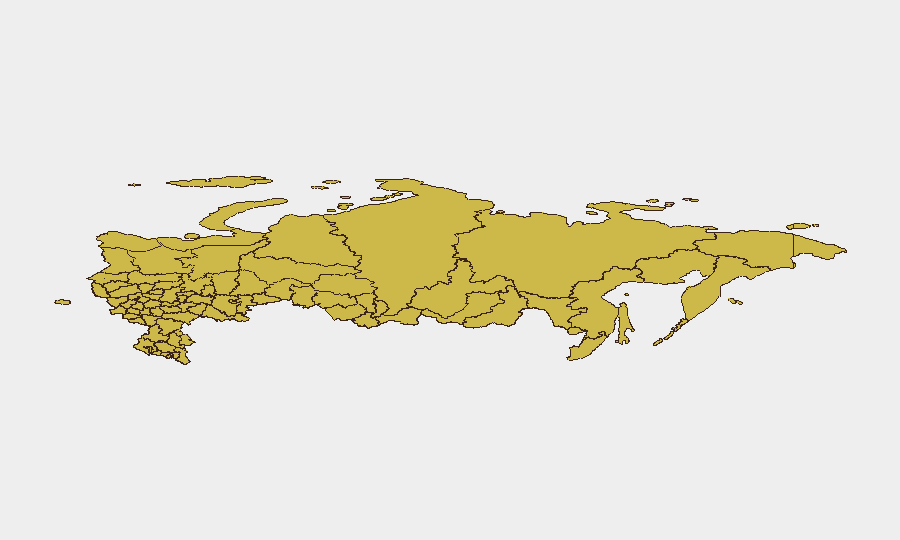
Moscow dominates sub-national risk (96.5), reflecting capital-city infrastructure density and proximity to Ukrainian strike range, as evidenced by the Aug 1–2 industrial and logistics hits. Perm, Kursk, Bashkortostan, Astrakhan, and Volgograd Oblasts form a secondary risk tier (68.5–69.9) due to exposure to drone strikes on energy and military facilities; the overnight refinery and radar system attacks in Bashkortostan and air-base strike in Saratov (67.8 risk) confirm active targeting of these regions. Southern and central regions hosting critical infrastructure—ports, refineries, air bases, and radar systems—face sustained operational and casualty risk from drone and conventional fire.
How GeoBit Would Assist
Security teams in Russia would deploy AOI Monitoring & Early Warning for persistent watch on critical-infrastructure sites, logistics hubs, and regional airports, with alerting on drone activity or air-defense activation. Conflict & Military battle mapping and force-structure tracking enable real-time visibility into Ukrainian strike patterns and Russian air-defense deployment, supporting route planning around active threat zones. Maritime & Aviation tracking combined with Routing & Network Analysis allows duty-of-care teams to identify alternative corridors and supply-chain resilience during port closures and flight restrictions.
7-Day Outlook
Drone strikes on energy and military infrastructure are likely to continue at or above current frequency absent diplomatic intervention; cumulative damage to fuel supply and air-defense systems will degrade Russian logistics and air coverage. Commercial operations in southern and central regions should anticipate further port closures, flight disruptions, and infrastructure-access constraints. Moscow and adjacent oblasts will remain focal points for strike activity and civilian disruption through early-to-mid August.
Highest-Risk Areas — Ranked
| # | State / Region | Risk |
|---|---|---|
| 1 | Moscow | 96.5 |
| 2 | Perm Krai | 69.9 |
| 3 | Kursk Oblast | 69.9 |
| 4 | Bashkortostan | 69.1 |
| 5 | Astrakhan Oblast | 68.7 |
| 6 | Volgograd Oblast | 68.6 |
| 7 | Republic of Kalmykia | 68.5 |
| 8 | Rostov Oblast | 68.5 |
| 9 | Kaluga Oblast | 68.4 |
| 10 | Tatarstan | 67.8 |
| 11 | Samara Oblast | 67.8 |
| 12 | Orenburg Oblast | 67.8 |
Sources
Previous Daily Briefs
A new Russia brief is written every day — each with its own risk map and downloadable CSV. Here's the last week; use the calendar to go further back.
📅 Browse every day by calendar →
Highlighted days have a brief. Tap a day for that day's map & analysis, or “csv” for that day's dataset ($5).
Atlas — our AI intelligence desk — emails them this snapshot personally. Nothing else, no list.